
ASK A SCIENTIST
Do you ever wonder about various aspects of plastics and plastic pollution? Our science director, Trisha Vaidyanathan, Ph.D., is here to shed some light on these questions in her monthly column, “Ask a Scientist.”
Got a question? If you would like to ask a question for Trisha’s consideration, please submit it using this form. Please note that we cannot guarantee an answer to every question we receive.
Can plastics impact my dog’s health?
Plastic can harm our own health, but what about our dogs? Just like us, our dogs are exposed to plastic throughout their lives, from their food and toys, to furniture and outdoor pollution. Unfortunately, just like us, plastics — particularly the chemicals within them and the microplastics they create — can pose a threat to our dog’s health.
Are microplastics helping to create drug-resistant superbugs?
Scientists are increasingly alarmed by the rise of antibiotic-resistant bacteria, or “superbugs,” which could make even minor infections much harder to treat. Plastic may seem unrelated, but recent discoveries are finding a surprising link.
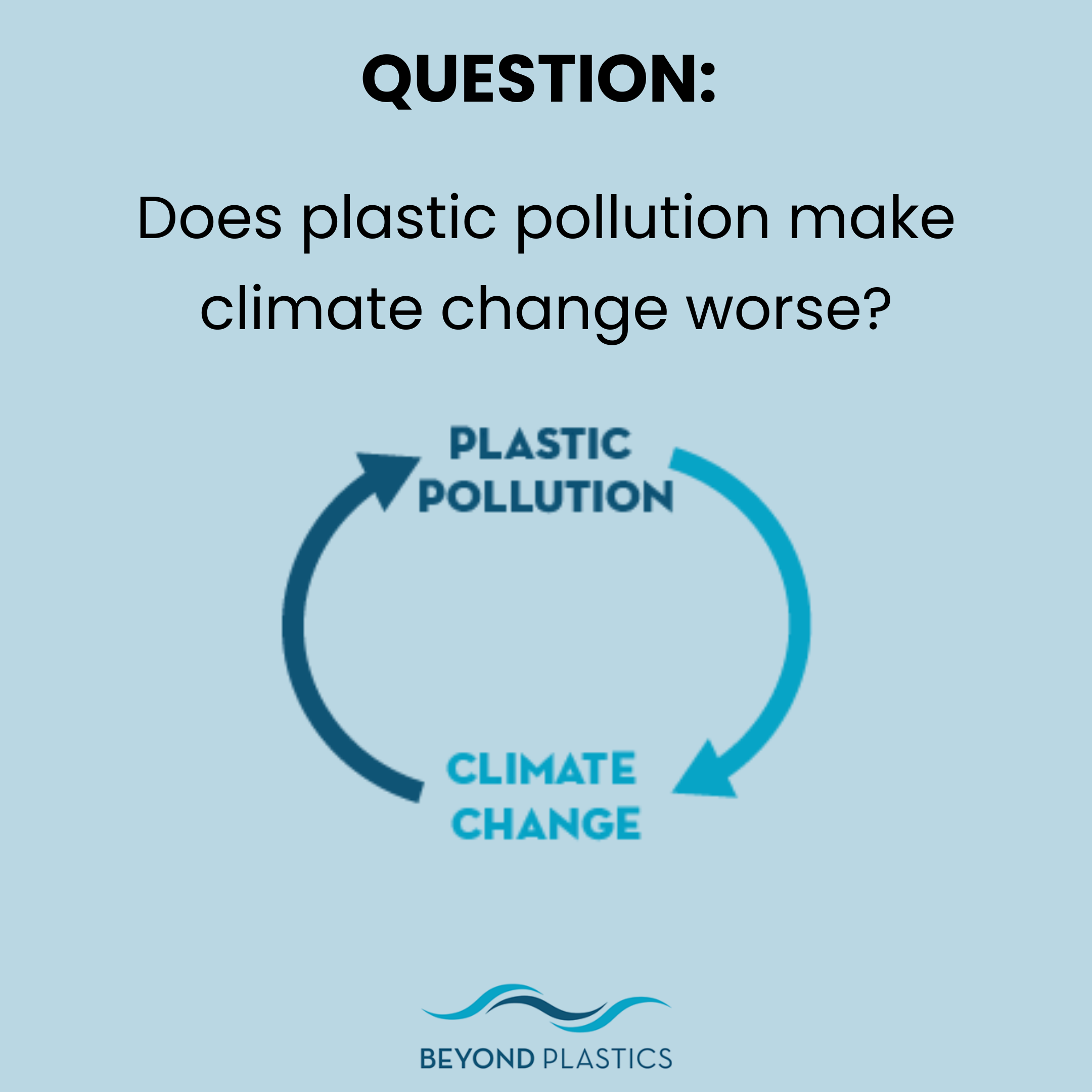
Does plastic pollution make climate change worse?
Plastic pollution is often treated as a waste problem, separate from climate change. In reality, the two crises are deeply interconnected. Plastic pollution contributes to climate change, and climate change, in turn, makes plastic pollution harder to control.
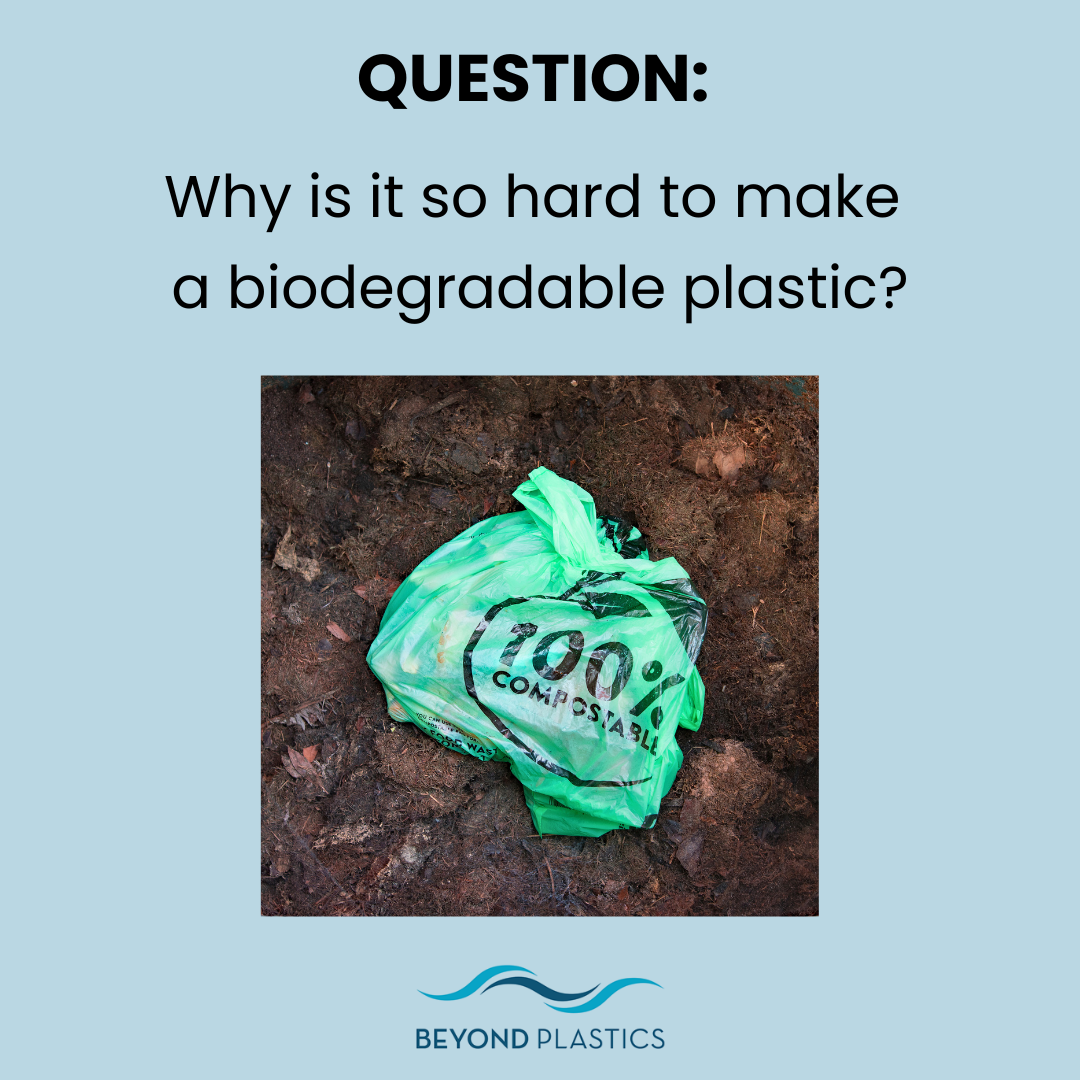
Why is it so hard to make a biodegradable plastic? Are so-called compostable plastics the answer?
“Biodegradable” means that biological organisms, like bacteria and fungi, break something down until there’s nothing left but carbon dioxide (CO2), water, and something called biomass (natural material from living things). Learn more about the challenges of making a truly biodegradable plastic.
Can Avoiding Plastic for One Week Reduce the Level of Toxic Chemicals in Your Body?
A new scientific study published in Nature Medicine found that just seven days of living with less plastic significantly reduced levels of chemicals used to make plastics in our bodies. Learn more.
Why Do We Need to Take Extra Precautions to Protect Children?
Children are uniquely vulnerable to toxic chemical exposures for a number of reasons. Find out what they are and why it’s critical to take extra precautions to protect their development and health.
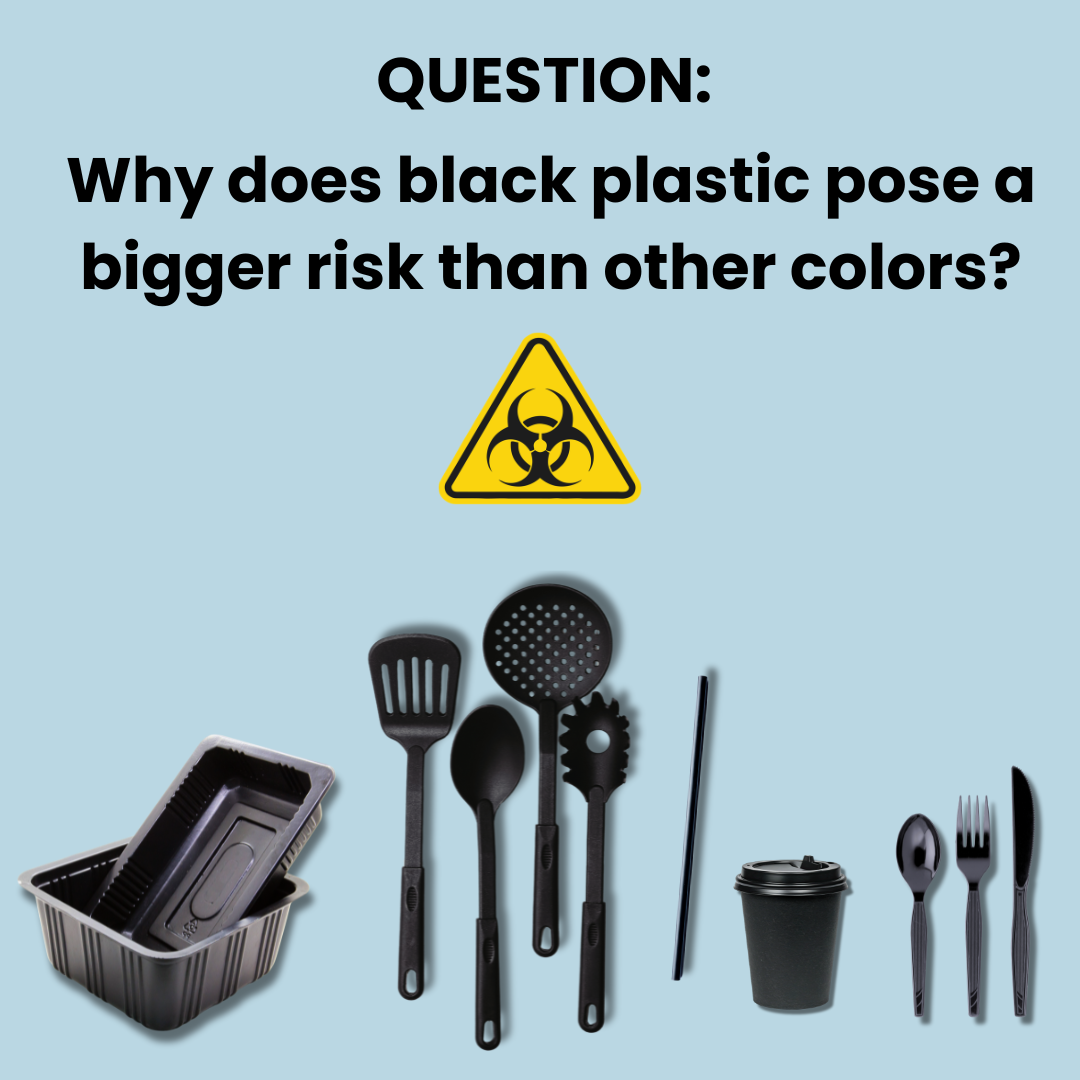
Why Does Black Plastic Pose a Bigger Risk Than Other Colors?
Why do scientists specifically suggest getting rid of BLACK plastic utensils and items in your kitchen? Find out why black colored plastics pose a bigger risk than other colored plastics, in general.
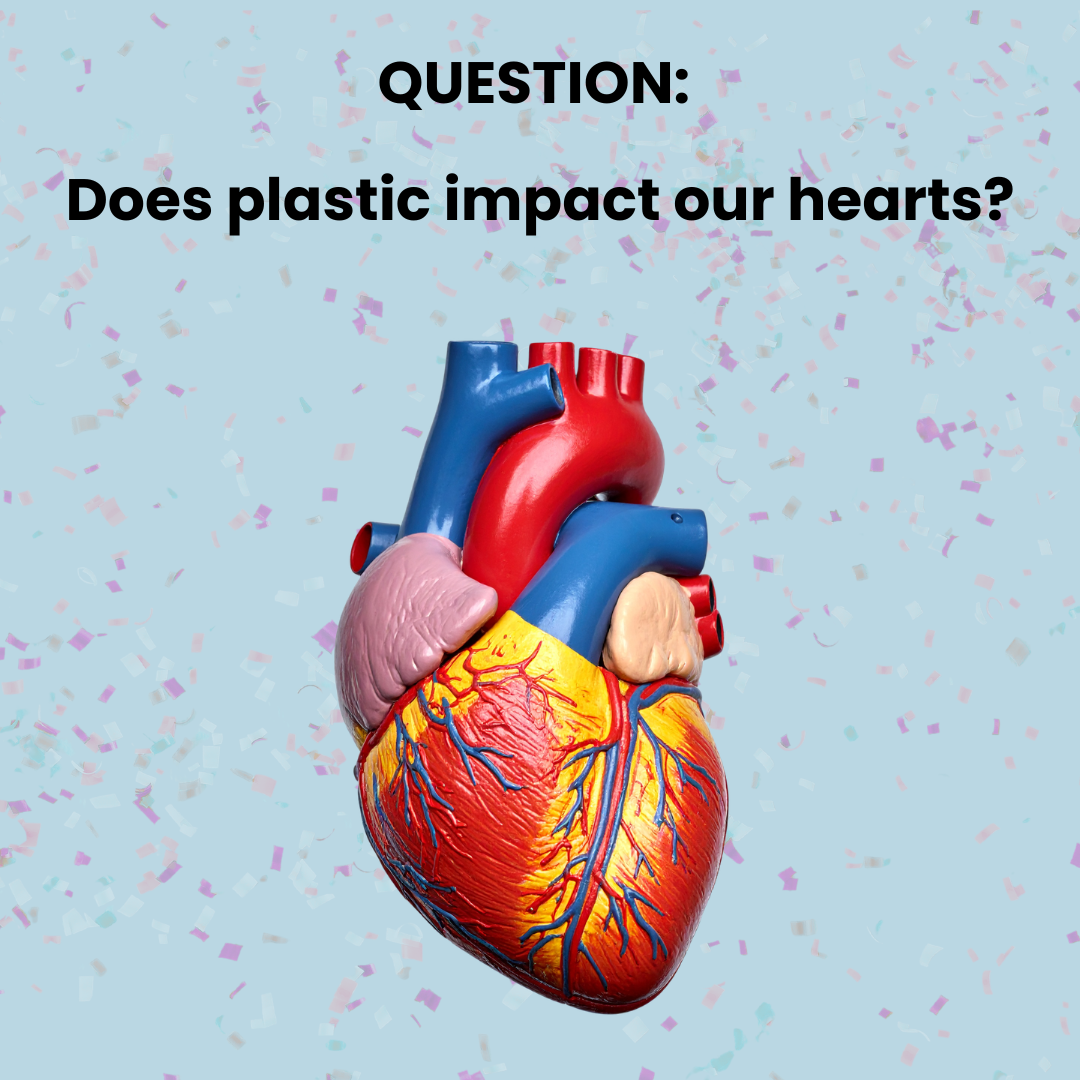
Does Plastic Impact Our Hearts?
Some microplastics are tiny enough to pass through the lungs or gut and enter the bloodstream, where they can travel throughout the body and accumulate around the heart. An 2024 study in the New England Journal of Medicine provided the first evidence in humans that directly linked microplastics to heart damage. Learn more
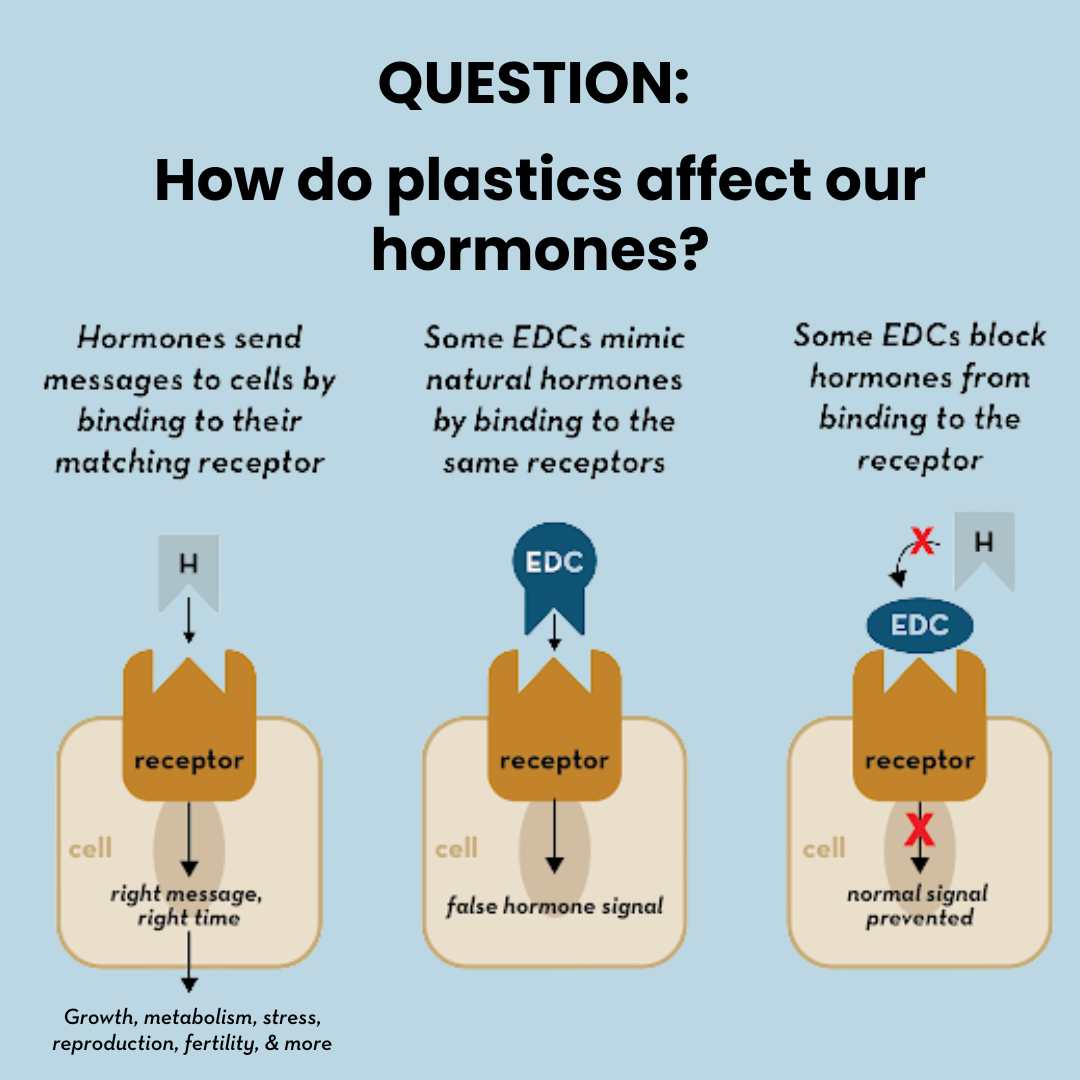
How Does Plastic Affect Our Hormones?
Plastic pollution isn’t just an environmental problem, it’s also a human health issue. One of the most well-studied concerns involves chemicals that disrupt the body’s hormone system, known as the endocrine system. Learn more.
Can I Recycle Wrapping Paper?
With the holidays approaching, you may be wondering if you can recycle used wrapping paper. Find out!
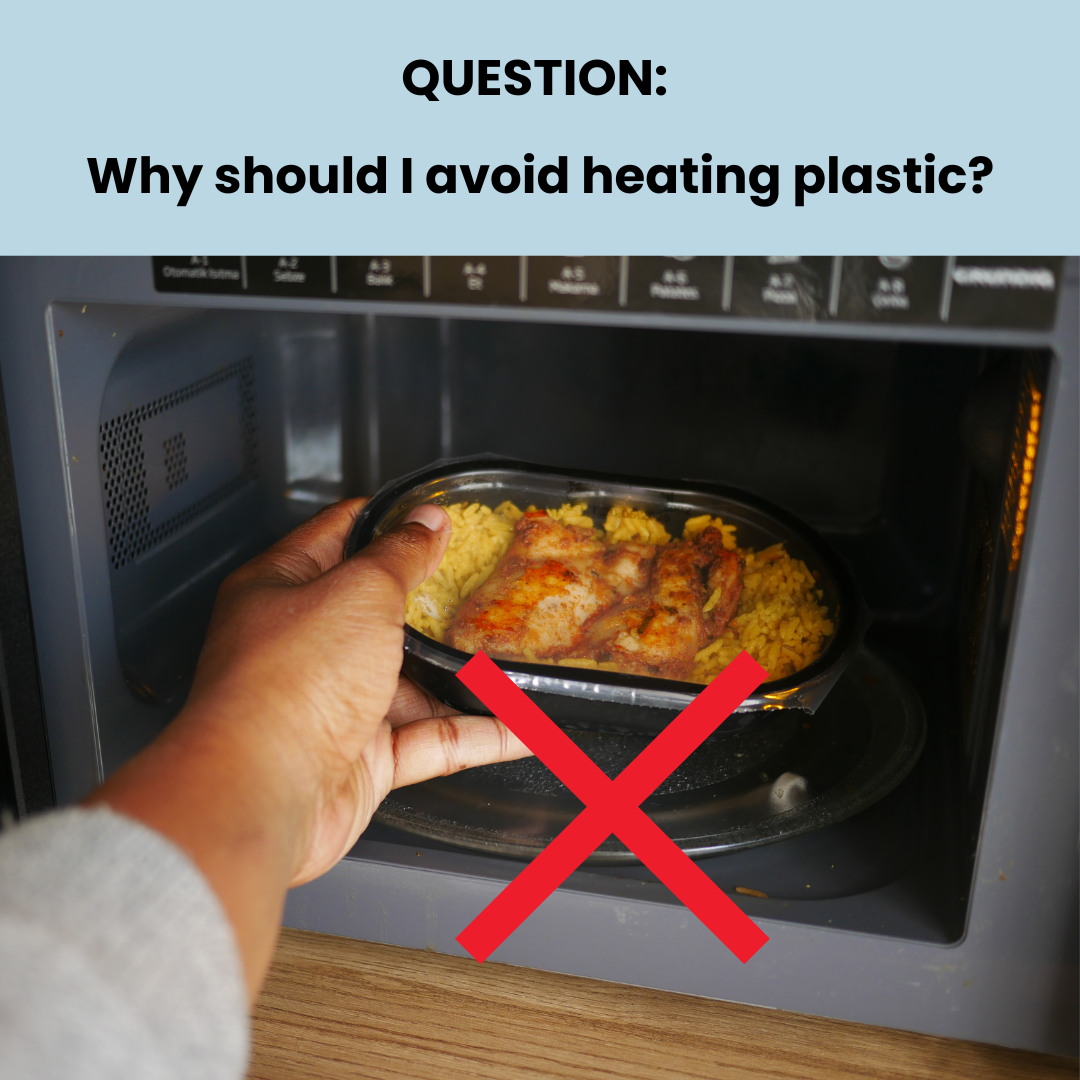
Why Should We Avoid Heating Plastic?
You may have heard that you should not heat food up in plastic in your microwave. Why is it a bad idea to heat plastics? Find out!
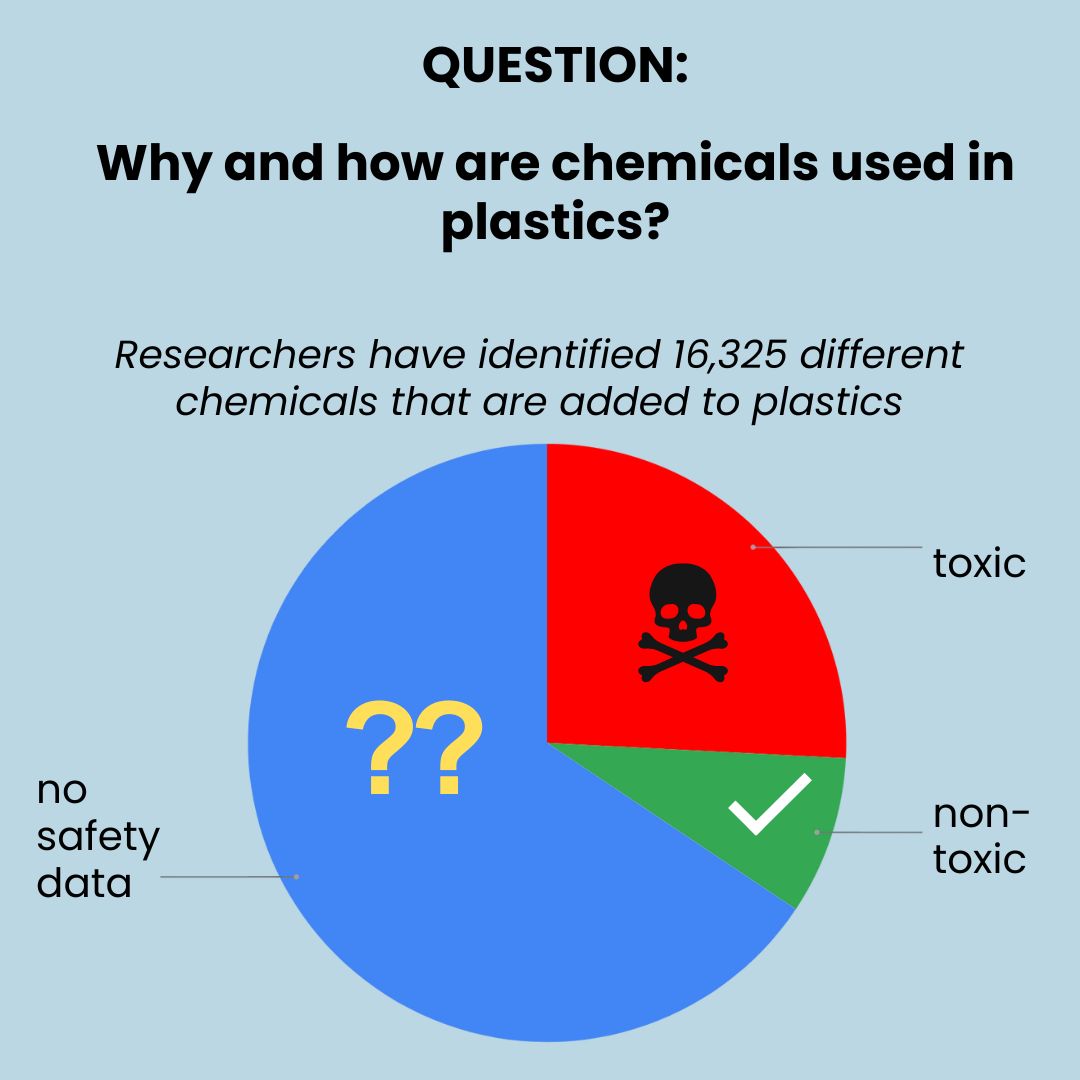
Why & How Are Chemicals Used in Plastic?
Plastics are made from a combination of fossil fuels (or another feedstock) and a mixture of more than 16,000 chemical additives. Learn more about what these chemicals are, why they’re added, and what their impacts are.