PRESS INQUIRIES
If you are a reporter looking to speak with Judith Enck or another member of the Beyond Plastics team, please click here to contact us.
SPEAKING REQUESTS
Looking for a keynote speaker, webinar panelist, educational lecture, or something else? Please click to share the details of your request with us.

Environmentalists in nine New York communities from Buffalo to Manhattan are calling on Starbucks to stop telling customers that its single-use plastic cold cups are “widely recyclable,” after a nationwide tracking investigation by Beyond Plastics could not confirm a single cup being recycled.
The demonstrations in Manhattan, Queens, Brooklyn, Westchester, New Paltz, Saugerties, Rochester, Buffalo, and Albany are part of a national Starbucks Week of Action urging the company to stop saying that their plastic cups used for cold drinks get recycled, when they are not.
Demonstrators at 22 Starbucks stores across 11 states are calling on the coffee giant to stop telling customers that its single-use plastic cold cups are “widely recyclable,” after a nationwide tracking investigation by Beyond Plastics could not confirm a single cup being recycled.
Beyond Plastics announced that its Beyond Plastics Network now includes 200 local groups and affiliates across the United States, a milestone for the 7-year-old group. As of July 23, Beyond Plastics Network spans 40 states and includes new grassroots groups and local groups affiliated with other organizations. They are united in working to reduce the production, use, and disposal of plastics.
Beyond Plastics has learned that Braven Environmental’s plastics pyrolysis — aka “chemical recycling” — facility in Zebulon, North Carolina, has been shut down by environmental regulators. In 2023, the American Chemistry Council brought New York state Assemblymembers Alicia Hyndman, Chantel Jackson, Stefani Zinerman, and others to the facility to show the “success” of so-called “chemical recycling,” which the petrochemical industry holds up as a solution to the plastic pollution crisis.
IN THE NEWS
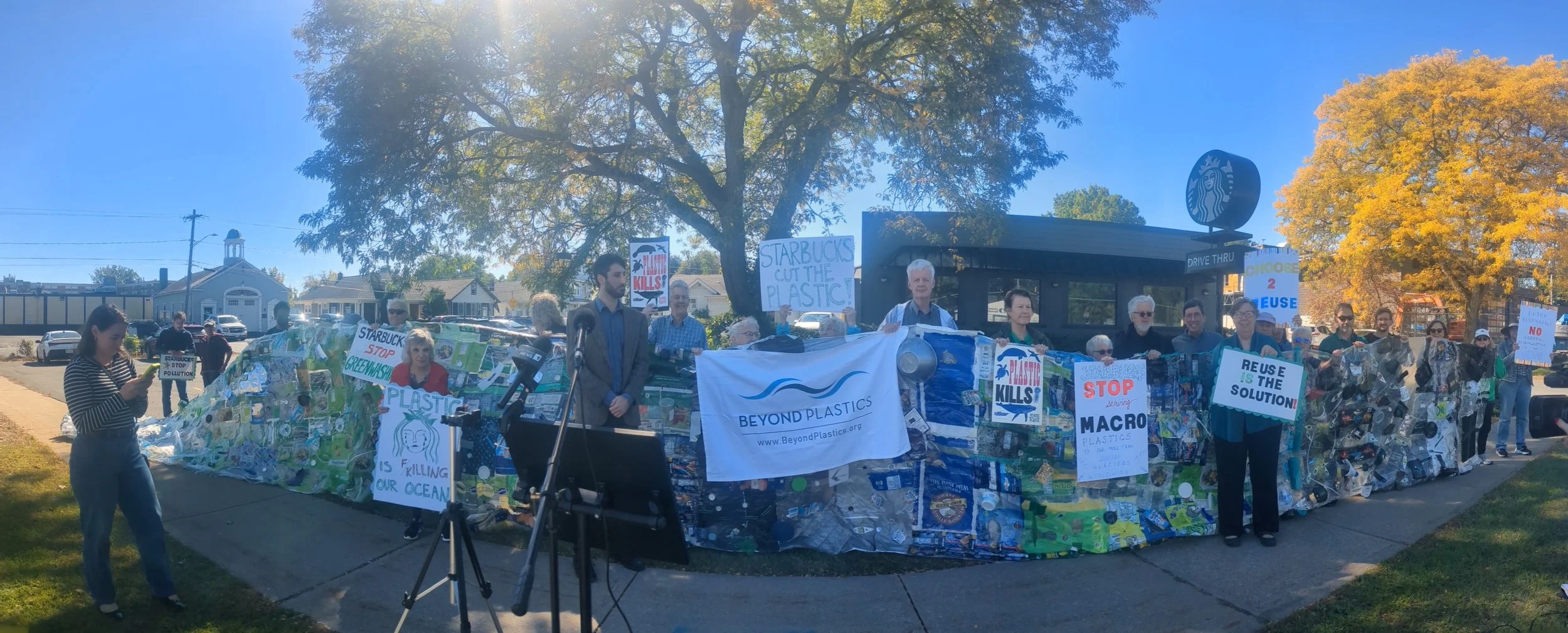
DEMONSTRATIONS AT 22 STARBUCKS STORES ACROSS 11 STATES CALL ON COFFEE GIANT TO STOP LYING ABOUT PLASTICS RECYCLING

While the Trump administration has put a pause on many proposed new tariffs, some — like the 25 percent tariff on aluminum — are still in play. Coca-Cola chief executive James Quincey said that Coke may increase its use of plastic to mitigate price hikes, as it imports aluminum from Canada for its soda cans.

Microplastics have been found for the first time in human ovary follicular fluid, raising a new round of questions about the ubiquitous and toxic substances’ potential impact on women’s fertility. The new peer-reviewed research published in Ecotoxicology and Environmental Safety checked for microplastics in the follicular fluid of 18 women undergoing assisted reproductive treatment at a fertility clinic in Salerno, Italy, and detected them in 14.

Americans are being peddled misinformation about what happens to the plastic they buy and use in their daily lives, and Maryland taxpayers have an opportunity to fight back. California Attorney General Rob Bonta has sued ExxonMobil for the fossil fuel company’s pollution and track record of misinformation — particularly around the recyclability of Americans’ plastics.

While other governments have brought legal action against consumer brands for their plastic pollution, California’s case is the first to target a major plastic producer for falsely promoting recycling as a solution.

This is a historic moment in the fight against plastic pollution, a crisis that has been created by companies that have known recycling was not possible for most plastics. While others have filed important suits against consumer brand companies for their pollution, like New York attorney general Letitia James’ lawsuit against PepsiCo, Bonta’s suit is the first to target a company for lying about plastic recycling’s efficacy.

Black-colored plastic used in children’s toys, takeout containers, kitchen utensils and grocery meat and produce trays may contain alarming levels of toxic flame retardants that may be leaching from electronic products during recycling, a new study found.