
Why & How Are Chemicals Used in Plastic?

Plastics are made from polymers, which are long chains of repeating molecules. But the final plastic product isn’t just the polymer. Plastic, as we know it, requires the addition of many added synthetic chemicals and would not exist without them. So far over 16,000 chemicals have been identified in plastics.
Some plastic chemicals help create the polymer, some are unintentionally created as byproducts during chemical reactions, and others, called “additives” are added intentionally to give the plastic specific properties, like color, strength, flexibility, heat resistance, water resistance, and more. For example, depending on the additives used, the same plastic polymer, PVC (polyvinyl chloride), can be used to make both soft IV fluid bags and hard vinyl flooring.
Although these additives make plastic versatile, some of the chemicals cause serious health and environmental impacts – roughly one in four chemicals found in plastic are known to be toxic to humans or wildlife. These include well-studied toxic chemicals like PFAS, phthalates, bisphenols, and heavy metals like lead and mercury.
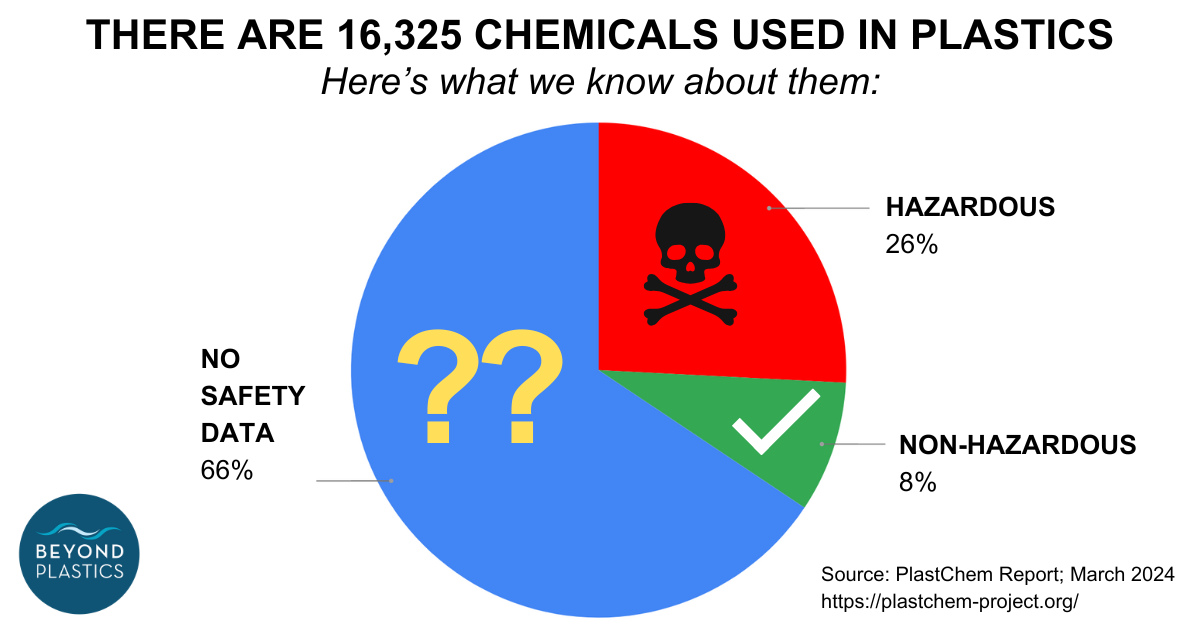
Even more concerning, is the fact that there is no public safety data about a whopping two-thirds of the chemicals used in plastics. This lack of both data and transparency makes it hard for consumers, scientists, and policymakers to make informed decisions to protect public and environmental health.
You can learn more about the toxic chemicals used in plastic at our upcoming webinar on Wednesday November 12th, 7:00-8:00pm EST. See you then!

Do you have a question about the science of plastics? You can submit it here for Trisha’s consideration. Please note that we cannot answer every question we receive.
