

Why Should We Avoid Heating Plastic?

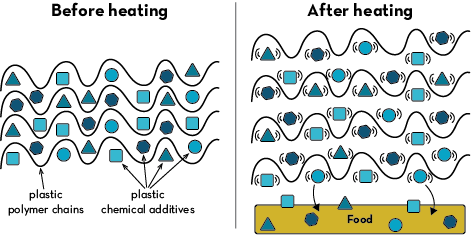
You may have heard that it’s best not to microwave plastic — but why not? To understand this, it helps to know what plastic is made of. Plastics are long chemical chains called polymers, combined with smaller molecules called “additives”, some of which may be harmful to our health.
These additives are only loosely attached to the polymer chains. When plastic is heated, its molecules will move around more freely and the whole structure will become less rigid. This makes it easier for those additives to detach and migrate into nearby foods or liquids.
How much, and what kind of, chemical migrates will depend on the type of plastic, how hot it gets, and the contact time — migration can also happen slowly at room temperature during storage. Migration will also depend on the type of food inside. Fatty or acidic foods, for example, tend to draw out more contaminants.
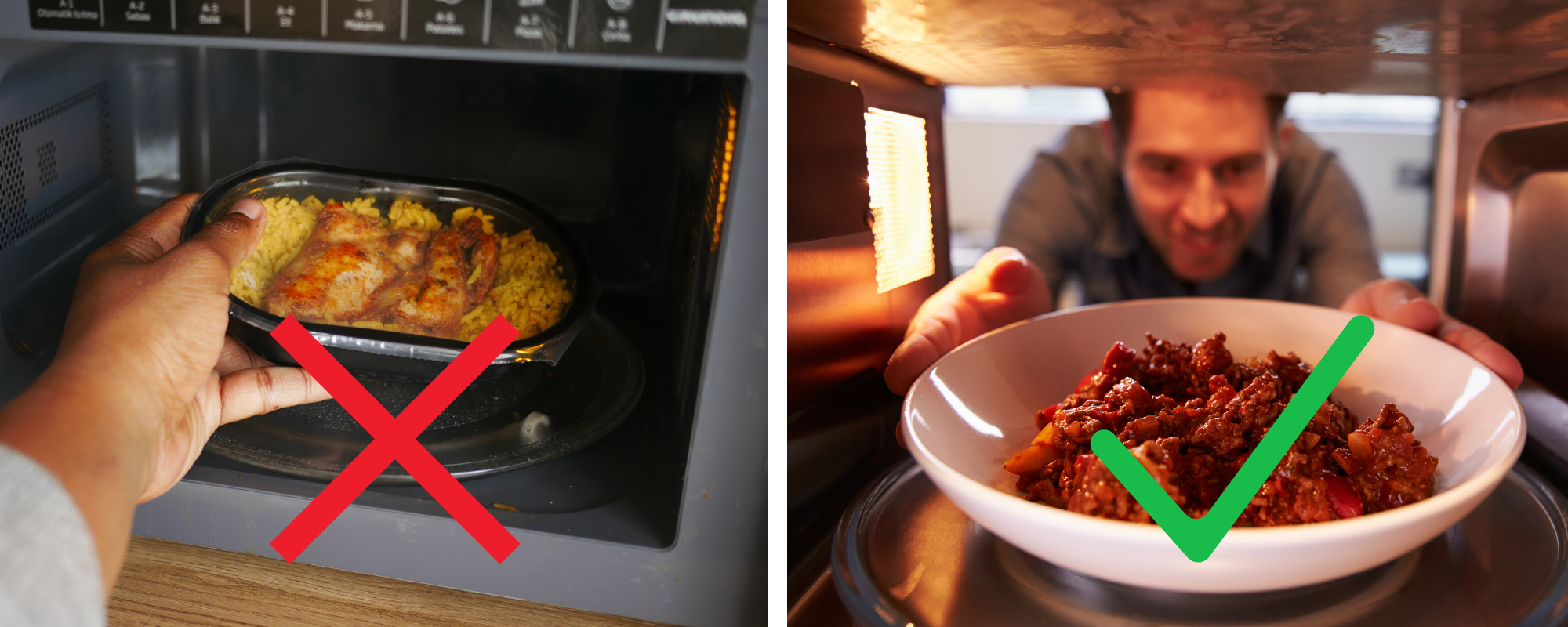
To reduce your exposure, heat food in containers made of inert materials like ceramic or glass, avoid storing hot, fatty, or acidic food in plastic, and try to shorten the storage time of all food and beverages in plastic containers.
Do you have a question about the science of plastics? You can submit it here for Trisha’s consideration. Please note that we cannot answer every question we receive.
