Bottle Caps Should Be ATTACHED To Reduce Plastic Pollution and Litter
Bottle Caps Are a Major Source of Plastic Pollution

Caps and lids from food and beverage containers are among the top five items found in beach and marine litter surveys — in amounts as high as 19 caps for every 100 yards of shoreline.
According to the North Sea Foundation, more than 20 million bottle caps have been collected in beach litter surveys around the world over the last three decades.
Bottle caps are made from different types of plastics including No. 5 polypropylene, No. 2 HDPE, and No. 1 polyethylene — all of which are hard, buoyant, and not degradable, making this source of litter an ongoing threat to marine life.
In fact, the Ocean Conservancy has found that plastic bottle caps are one of the “top five deadliest forms of marine pollution.” Seabirds, turtles, fish, and marine mammals often mistake bottle caps for food, and can be injured or killed when these caps scrape their throats or accumulate in their stomachs.

Dead albatross with a belly full of plastic trash including at least three bottle caps at Midway Atoll Refuge by Chris Jordan via U.S. Fish and Wildlife Service Headquarters
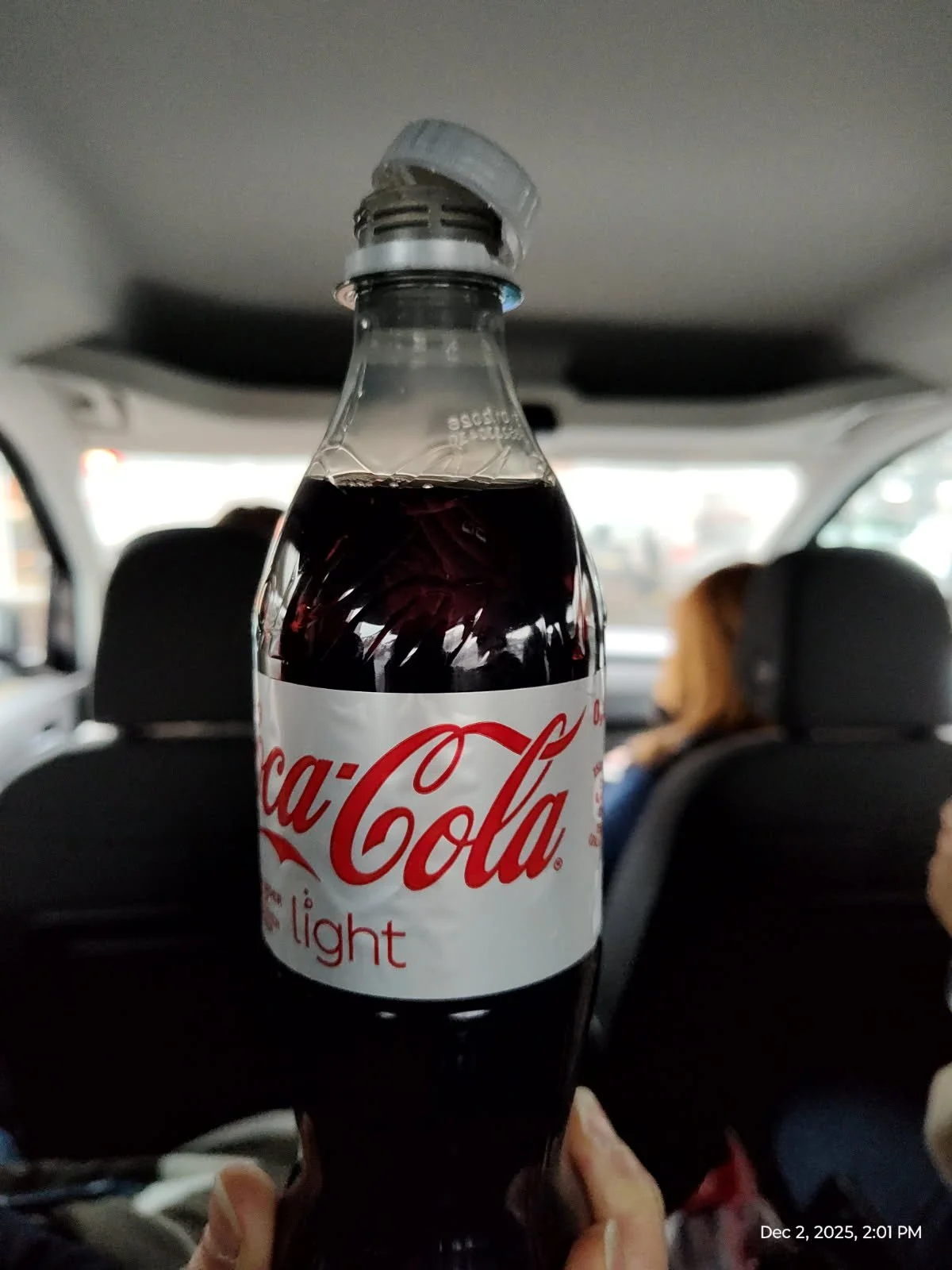
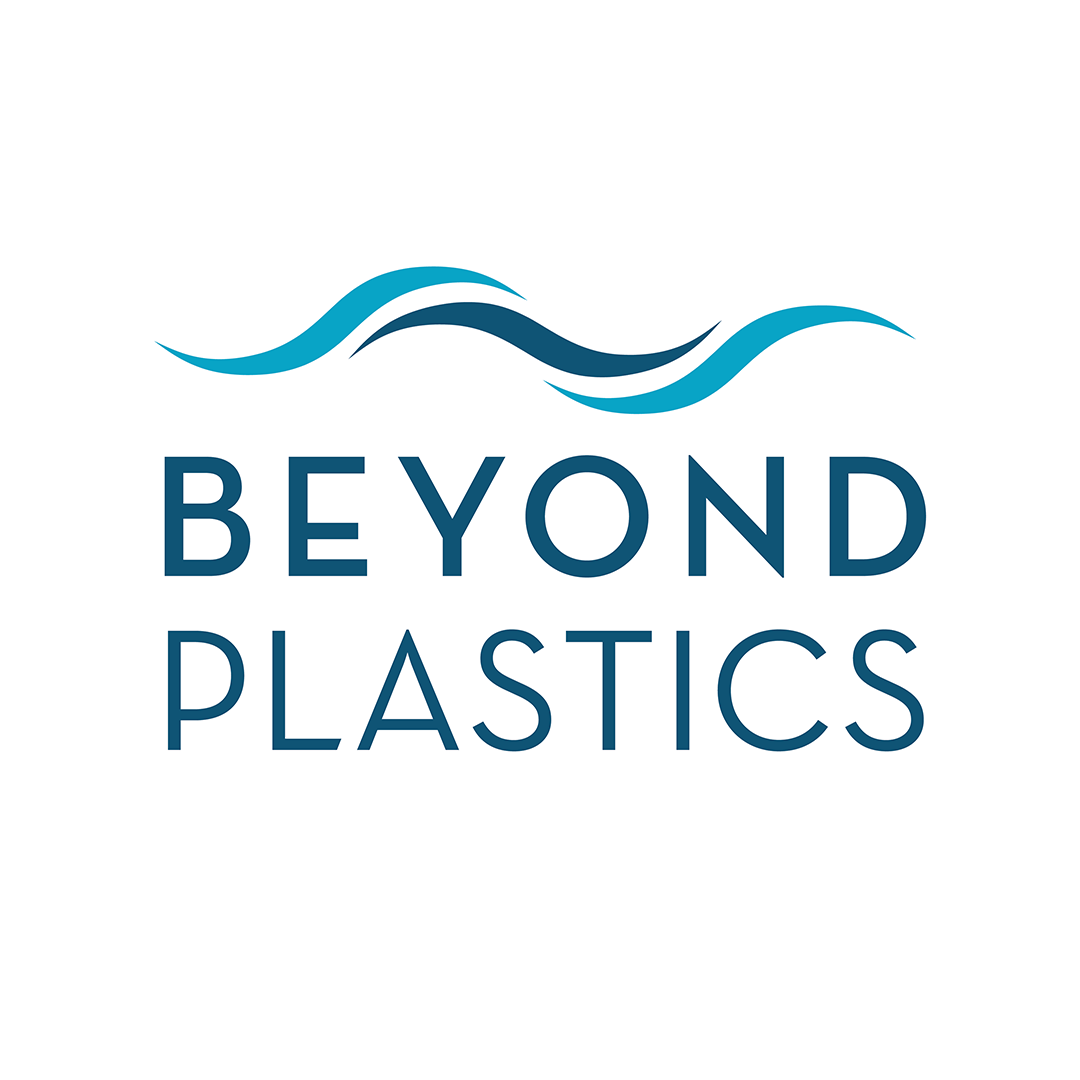
Photo of a Coca-Cola bottle with an attached cap taken in Germany in December 2025.
One Solution: Require Attached Caps
Attached caps (also called “tethered,” or “leashed” caps) are designed to keep the cap physically connected to the bottle after opening to prevent the caps from ending up as litter. Attachment mechanisms include hinges, straps, and fixed bands.
Adoption in the European Union
The European Union’s 2019 Single-Use Plastics Directive required that by 2024, single-use plastic products could only be sold with attached caps and lids, and big soda companies — including Coca-Cola and Pepsi — are complying with this directive.
Coca-Cola EU’s website states that attached caps “boost collection and recycling, and help to prevent litter,” and its U.K. website announced the introduction of attached caps with the slogan “Better Together.”
The manufacturer Tetra Pak calls tethered caps on multi-material drink boxes and cartons “the new normal” for the European market, but has not yet introduced this change in the U.S.
Connected Caps Will Not Happen in the U.S. Without New Laws
Unlike in the EU, the U.S. does not yet have laws requiring tethered caps. However, several U.S. states do have bills pending on this issue:
California’s SB 45 requires tethered caps by 2027 for certain bottles, and is supported by the Association of Plastic Recyclers, the Product Stewardship Institute, multiple environmental groups, and recycling companies such as Recology, Republic Services and Waste Connections. The American Beverage Association (representing soda companies) opposes the bill.
Illinois’ bill SB 0132 requires tethered caps by 2029.
Beverage companies in the United States have been slow to voluntarily transition to tethered caps, citing a “less than optimal” user experience. But some have made the change:
Crystal Geyser is the first U.S. bottled water brand to voluntarily adopt a tethered cap design for the 8-ounce bottles it manufactures in California and sells in six western states.
The U.S. supplier Aptar has designed tethered and flip-lid caps, promoting the caps as providing increased consumer convenience and better recycling rates.
The company Origin Materials has introduced an attached cap that is made of PET — the same material used for bottles “to improve recycling circularity.”
However, according to an executive in a company that makes caps, tethered caps will not become common in the U.S. until states require them: “The need for tethered closures in the U.S. will most likely be driven by state regulation. We anticipate the states that currently regulate post-consumer resin (PCR) will be the first states to desire tethered closures.”
Attached Caps Will Not Happen in the U.S. Without New Laws
Unlike the EU, the U.S. does not yet have laws requiring attached caps. However, there are bills pending on this issue in three states:
New York’s S8600 / A9354, introduced by Senator Sutton and Assemblyman Colton, requires attached caps within three to six years of bill passage.
California’s SB 459 requires attached caps by 2027 for certain bottles, and is supported by the Association of Plastic Recyclers, the Product Stewardship Institute, multiple environmental groups, and recycling companies such as Recology, Republic Services and Waste Connections. The American Beverage Association (representing soda companies) opposes the bill.
Illinois’ SB 0132 requires tethered caps by 2029.
Very few companies in the United States have voluntarily transitioned to attached caps, citing a “less than optimal” user experience. But some have made the change:
Crystal Geyser is the first U.S. bottled water brand to use attached caps for the 8-ounce bottles it manufactures in California and sells only in six western states.
The U.S. supplier Aptar has designed attached and flip-lid caps, promoting the caps as providing increased consumer convenience and better recycling rates.
The company Origin Materials has introduced an attached cap that is made of PET — the same material used for bottles “to improve recycling circularity.” Making caps from the same material as the bottle would be extremely beneficial and is the best option.
However, according to an executive at Silgan Closures, maker of food and beverage closures, attached caps will not become common in the U.S. until states require them: “The need for tethered closures in the U.S. will most likely be driven by state regulation. We anticipate the states that currently regulate post-consumer resin will be the first states to desire tethered closures.”
Unattached Bottle Caps’ Impact on Recycling
There is some confusion among consumers around the best practices for recycling bottle caps. Although beverage companies encourage people to leave the caps on the bottles when placing them in the bin for recycling, many people are not aware of this.
A 2022 Greenpeace study found that only 11 out of 367 (3%) of U.S. materials recovery facilities (MRFs) accept loose plastic lids and caps, and despite this acceptance, they reported evidence of “disposal or export” of mixed plastics.
When bottle caps are put in the recycling bin attached to the bottle, they can be recycled but the process requires a few extra steps because they are made of a different kind of plastic than the bottle is, and those two types cannot be recycled together. Some caps are made from HDPE and LDPE, which if combined with polypropylene caps, create low-value mixed plastic waste that is not being recycled at scale in the United States.
Recyclability of the waste plastic would be enhanced if the caps were made of the same plastic type PET (resin) as the bottles, themselves — as long as the caps are clear rather than colored to avoid contaminating the clear plastic recycling process (see the photo of the Origin Materials bottle on page 2 for a good example of this.)
Whether they are ultimately recycled or not, plastic bottle caps should be connected to their bottles to prevent harmful litter. Furthermore, history proves that making these changes is possible. Decades ago, the sharp metal pull tabs from soda and beer cans littered the landscape, cutting people’s feet, and harming farm animals. Yet by the early 1980s, these problematic tabs had all been replaced by intentionally redesigned “stay tabs” that remain attached after opening.
Coca-Cola and PepsiCo Can Afford to Make This Change
In 2024, the Coca-Cola Company made $10.6 billion in net income — a 23% profit margin. PepsiCo made $9.6 billion in net income in 2024 — a 10.4% profit margin. These companies clearly have the financial resources to update their production facilities to produce the tethered caps that will help reduce the volume of harmful litter and plastic pollution their products create.
If companies can afford to switch to tethered caps in the EU, they can afford to do the same in the U.S.