Plastic Toys: A Potential Risk to Children’s Health and the Environment
About 90% of toys on the global market are made primarily from plastic. The global toy market is valued at over $90 billion and continues to grow, driven in part by cheap plastic materials. Given children’s heightened vulnerability to chemical exposure, it’s critical to examine the widespread use of plastic in toys. Over 4,200 hazardous chemicals have been identified in plastic, along with thousands more that lack adequate safety data, raising concern about the safety of plastic toys.
Why Children Are Especially Vulnerable
Children are one of the most vulnerable populations to hazardous chemicals for several reasons:
Developing bodies: Children’s bodies and brains are rapidly growing and changing, with multiple “critical windows” of development during which chemical disruptions can have long-lasting or irreversible effects.
Higher exposure relative to body size: Because of their smaller size, what may be a small dose for an adult can be a large dose, with a large effect, in children. Children also eat, drink, and breathe more per pound of body weight, further increasing their relative exposure.
Behavioral factors: Children explore the world by putting things in their mouth, even if it’s not designed to go in the mouth. They also spend more time on or near the ground, increasing their exposure to chemicals and microplastics that settle or accumulate in dust.
How Children Are Exposed to Chemicals from Toys
Harmful chemicals can migrate out of toys during normal use and throughout a toy’s lifetime, resulting in multiple routes of exposure for children:
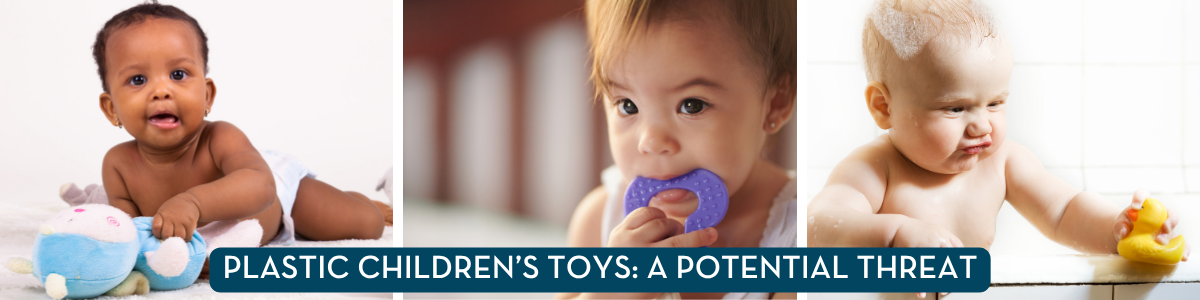
Mouthing: Young children frequently chew or suck on toys, and several studies have found that saliva can accelerate the release of chemicals from plastic, leading to direct exposure through the mouth.
Inhalation: Volatile and semi-volatile chemicals are chemicals released into the air. The impact of one toy may be minimal, but the effect can accumulate in a room full of toys.
Ingestion: Chemicals and microplastics can transfer from toys to hands, and then hands to mouths, during play.
Skin absorption: Children’s skin is thinner and more permeable than adults. Close contact with toys, like polyester stuffed animals or costume clothes, can lead to some chemicals being absorbed through the skin.
Chemicals of Concern in Plastic Toys
Because of the lack of transparency in the industry, it’s difficult to fully characterize the complex chemical mixture found in each toy. However, there are several categories of chemicals of concern that have been noted:
Plasticizers:
Increase flexibility and softness of plastic, commonly found in soft, rubber-like toys.
Many plasticizers, including phthalates, can interfere with hormone systems and affect the development of bodies and brains.
Plasticizers can be ingested, absorbed through the skin, or released slowly into the air and inhaled.
Although some plasticizers are restricted for use in certain children’s products, manufacturers often replace them with alternative plasticizers that may be less studied, allowing potential health risks to persist.
Flame retardants:
Added to plastics to reduce flammability.
Many flame retardants, such as brominated flame retardants, are associated with neurodevelopmental harm, hormone disruption, and cancer.
Many flame retardants are subject to bans and restrictions, but continue to be detected in toys, particularly those made with recycled plastic that have been contaminated with electronic waste.
A study by IPEN found chlorinated paraffins — a chemical used as a flame retardant, among other purposes — in all toys tested, with some levels so high they could be classified as hazardous waste.
Bisphenols:
Used to make plastics harder or more durable, also found in coatings and additives.
Some bisphenols, including bisphenol A (BPA) and its replacements, can interfere with hormone systems during development.
The Food and Drug Administration banned BPA in baby bottles, sippy cups, and infant formula packaging, but not toys. Some states have implemented further restrictions on BPA in childcare products.
Toxic metals:
Toxic metals like lead, arsenic, antimony and cadmium can be found in toys. They are used as chemical stabilizers, pigments, or contaminants.
Harmful effects range from neurodevelopmental, gastrointestinal damage, and childhood cancer.
Cheaper toys, imported toys from countries with weaker regulations, or toys from recycled materials may pose higher risks.
Colorants:
Commonly used in toys to create bright, attractive colors.
Colorants make up one of the largest categories of plastic chemicals, but are often poorly disclosed, making their health impacts difficult to assess.
Fragrances:
Used to add scent or mask plastic odors in some toys.
Typically made from complex chemical mixtures, which can include allergens or hormone-disrupting chemicals, but their full composition is rarely disclosed due to trade secret protections.
Plastic Toys and the Waste Crisis
Most plastic toys cannot be recycled because they contain multiple material types that cannot be recycled together, they have chemicals that contaminate the recycling stream, or they have embedded electronics that prohibit recycling. Instead, nearly 80% of toys end up in landfills, incinerators, or the ocean. Plastic toys may also release chemicals and microplastics into the environment during play, or after being discarded.
Like all plastics, plastic toys impact the environment throughout their life cycle. Life cycle assessments have found significant climate harms from plastic toys — for example, every year 60 million Barbie dolls are sold and contribute emissions equivalent to burning 381 million gallons of gasoline, about the annual gasoline use of 880,000 cars!
Recycled Plastic Is Not a Solution
Some toy companies promote recycled plastic as a sustainability solution. For example, Mattel is aiming for 100% recycled or biobased plastic materials by 2030 and LEGO aims for all of its plastic bricks to consist of renewable or recycled materials by 2032.
However, recycled plastics raise additional safety concerns. During recycling, toxic chemicals from different plastics and contamination sources, such as electronic waste, can accumulate in new products. One global study examining toys made from recycled plastic in 26 countries found high levels of several toxic flame retardants. The study estimated that exposure levels would be especially concerning with typical mouthing behavior by young children.
Current Challenges to Ensuring Safety
Chemicals of concern can be introduced at any point in the supply chain, and typically the full chemical composition of a toy is not known.
Toys are rarely labeled, preventing shoppers from making informed decisions.
Existing regulations usually focus on specific chemicals but fail to cover the broad range of chemicals used in toys. Regulations also differ across different states and countries.
What to Do
Parents cannot shop their way out of this issue, and avoiding plastic entirely is almost impossible. However, here are a few suggestions to help mitigate risk:
Advocate for change: Urge policymakers require companies to ensure toys don’t contain harmful toxic chemicals! And if they do, label them so consumers can make informed choices.
Avoid plastic when possible: Toys made of solid wood, paper, or cloth are safer alternatives when choosing new toys for your loved ones, especially younger children who may put toys in their mouth.
Limit close contact: This will be hard, but try to limit how much toys are chewed or sucked on, or limit close contact for long periods of time, like cuddling with a polyester stuffed toy all night.
Separate toys: If you have the space, try to not concentrate all the toys in the same room that a child is sleeping. That will help limit the amount of airborne chemicals inhaled.
Clean up: Vacuuming and opening windows frequently can reduce indoor air pollution and microplastics. Washing hands before eating is also a good practice.