
Plastic Pollution Is a Growing Threat to Birds’ Survival
Plastic is a threat to bird survival. It is found in nearly every seabird, woven into backyard nests, and scattered across the most remote bird habitats in the world. This problem is only getting worse as plastic production continues to rise.
How Does Plastic Harm Birds?
Ingestion 🥤
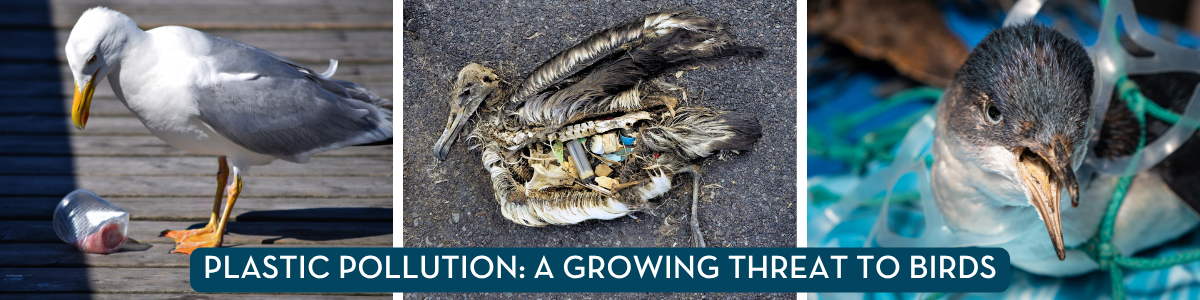
Birds often mistake plastic for food or eat it indirectly through prey like fish and worms that already contain small pieces of plastic.
Eating plastic can cause choking, damage to internal organs, or even starvation in birds.
Because plastic pollution is so widespread, all birds are at risk. By 2050, nearly every seabird on earth (99%!) will have ingested plastic.
It is estimated that just 11 microplastic pieces (smaller than 5 millimeters) lead to a 50% chance of death in seabirds, and 23 pieces leads to a 90% chance of death.
Entanglement 🪢
Birds become entangled in larger plastic items like bags, discarded fishing line, nets, and packing materials.
Plastic wraps around their wings, legs, or necks, leading to strangulation, injury, difficulty moving, or drowning.
Lost and abandoned fishing gear is the biggest driver, responsible for about 83% of documented entanglements.
Studies show that at least 36% of seabird species worldwide have been found entangled in plastic, with incidents also frequently documented in freshwater and land birds.
Nesting and Behavior 🪺
Plastic pieces are often mistaken for nesting material and woven directly into nests, where they can break down into harmful microplastics or release toxic chemicals.
Some nestlings can be caught in plastic pieces used in nests, with one study of Northern gannets finding over 60 birds entangled in a single colony.
In many species, plastic is now found in a majority of nests. For example, a study found white storks used plastic in 91% of nests.
Some birds, like the great bowerbird males in Australia, are increasingly using plastic in their courtship behaviors.
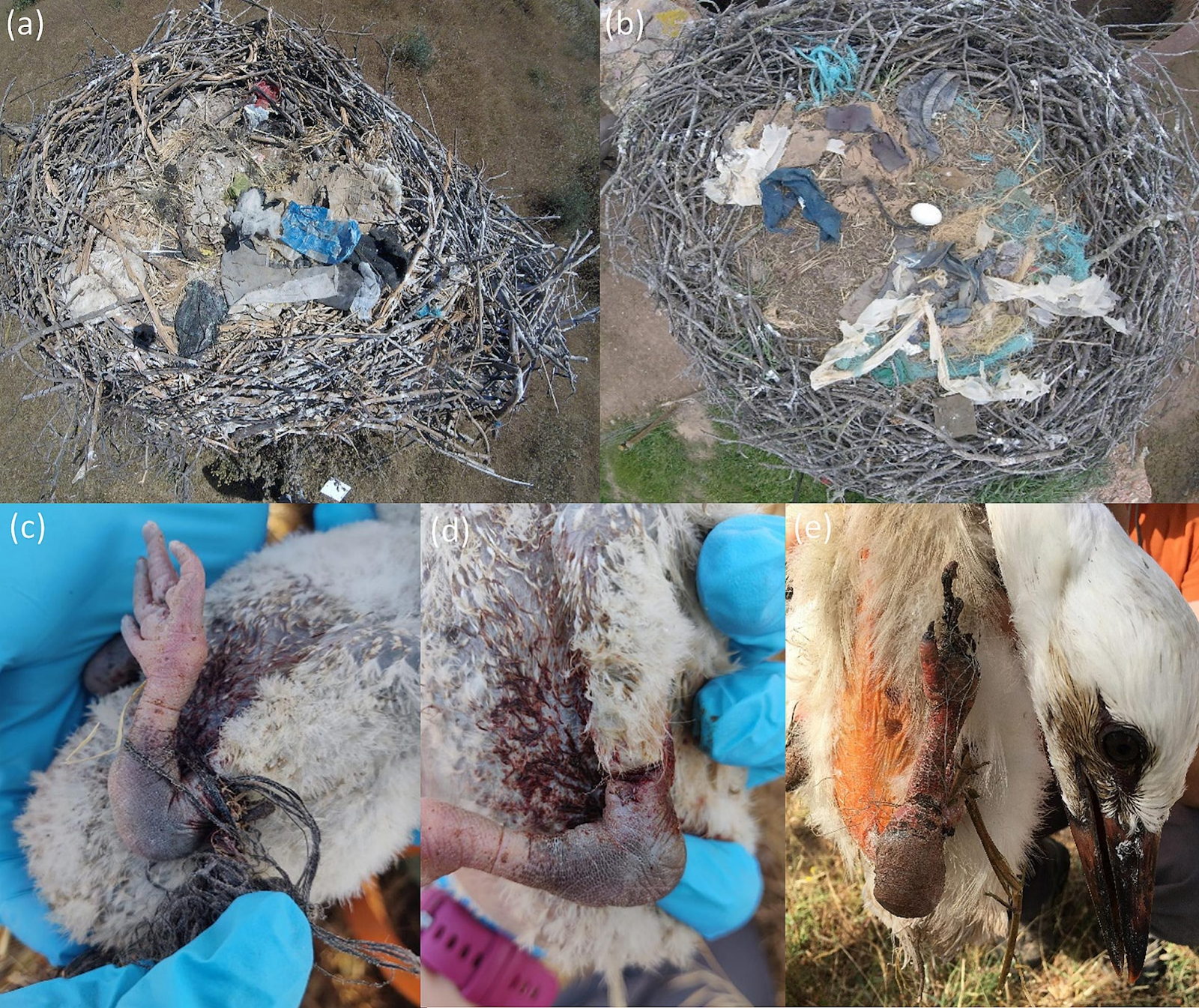
A white stork nest containing large amounts of plastic and debris. Credit: Heinze et al., 2025
Toxic Chemicals 🧪
Over 16,000 chemicals have been identified in plastic, most of which have not been tested for safety in the environment.
Birds are not exempt from the health impacts of plastic, with scientists even creating a new term — “plasticosis” — to describe the disease found in birds that eat plastic.
Birds with plasticosis have scarring and inflammation in the digestive tract, reducing their ability to absorb nutrients and survive.
Even at small doses, plastic chemicals can change blood chemistry, cholesterol, and body size. While not deadly, this can still significantly affect species health and survival.
The Scale of the Problem
Plastic pollution is a global and escalating threat affecting birds across oceans, coasts, and inland ecosystems. Plastic has been documented in birds from remote oceanic islands to urban backyards. Without intervention, the impacts will only get worse.
Nearly every seabird (90%) is estimated to ingest plastic, and 99% of seabirds will be affected by 2050.
Over a third (36%) of seabird species have been found entangled in plastic.
Plastic has been found in over 90% of nests in some species, such as the white stork.
Even small amounts matter: As few as 11 microplastics can give a seabird a 50% chance of death.
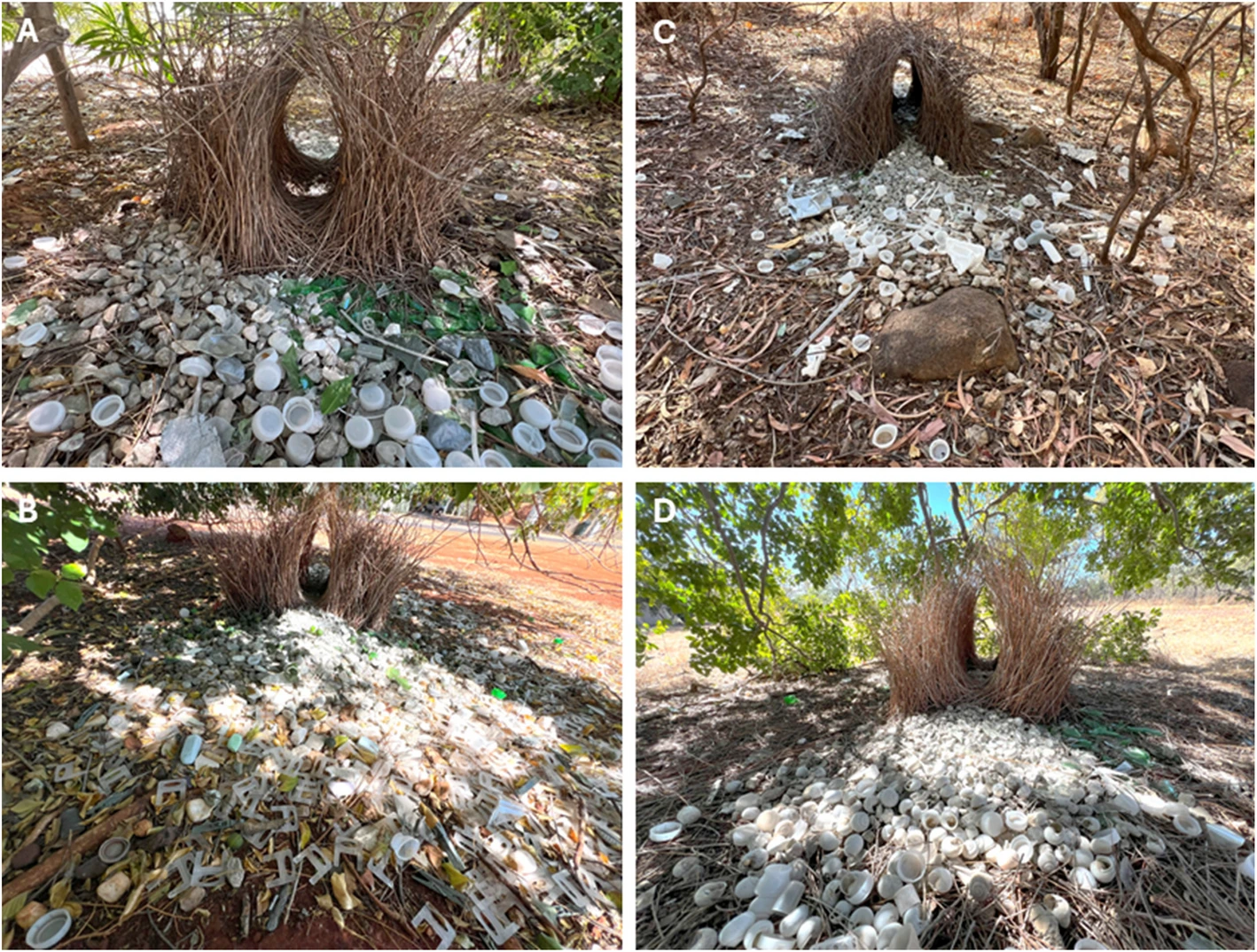
Example of a great bowerbird courtship structure that contains large amounts of plastic in Northern Australia. Credit: Lavers et al., 2025
Why This Matters
Bird populations are already under significant pressure, and plastic pollution is worsening these declines. In the United States alone, bird populations have dropped by nearly 3 billion since 1970. Globally, nearly half of bird species are in decline and 1 in 8 are threatened with extinction. In addition to habitat loss and climate change, plastic adds a fast-growing threat, with plastic pollution expected to more than double over just 15 years, from 2025 to 2040.
Reducing plastic pollution requires cutting plastic production and single-use plastic packaging before it enters the environment. Recycling cannot solve this problem as most plastics are not recycled, with only 5% to 6% of plastics getting recycled in the U.S. Policies that reduce single-use plastic packaging, shift responsibility to producers, and scale up reuse and refill systems are essential. By reducing our reliance on plastics, we can address one of the fastest-growing threats to birds while also protecting essential ecosystems, our climate, and public health.