
Silicone: Is it Plastic? Is It Safe?
What is Silicone?
Silicone is a human-made material that is often marketed as a sustainable alternative to plastic. Silicone can come in many different forms:
Silicone rubbers (flexible): This type of silicone is most recognizable, used in kitchen tools (spatulas, ice cube trays, baking molds), baby products (pacifiers, bottle nipples, toys), medical devices (feminine hygiene products, implants), and as sealing materials or gaskets.
Silicone liquids: Used to reduce friction and prevent sticking during packaging and manufacturing, also added during food processing and to cosmetics and personal care products.
Silicone resins (rigid): Silicones that harden into rigid, heat-resistant materials, used in coatings, paints, electrical insulation, and industrial applications.
Because silicone comes in different forms, its safety and environmental impacts can vary.

Is Silicone Plastic?
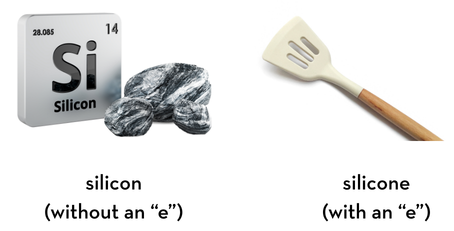
Silicone is similar to plastic in that it is also a human-made polymer — a large molecule made of repeating units — and it relies on fossil fuels during production. Unlike most conventional plastics, which are mostly made of carbon, silicone is made of oxygen and silicon (without an “e”), an element found in sand and rock that is used to create microchips, solar panels, transistors, and more.
How is Silicone Made?
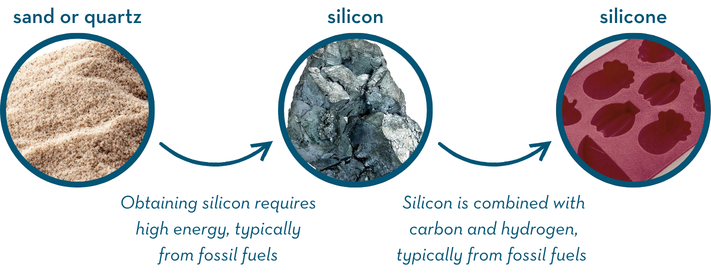
To make silicone, silicon is taken from sand or quartz using very high heat, requiring large amounts of energy that often comes from fossil fuels. Silicon is then combined with carbon and hydrogen — also typically from fossil fuels — to create silicone materials.
Use and Safety
Potential benefits:
Silicone is more durable than many plastics, and can handle high heat and freezing without damage. This can make silicone a better choice than similar plastic products for reusable items.
Potential safety concerns: Like plastic, silicone products contain added and leftover harmful chemicals that may:
Move into food or beverages;
Be released into the air; or
Be swallowed or absorbed through skin.
However, the extent to which we are exposed to harmful chemicals from silicone is still an ongoing area of research, and results so far are mixed. There is some evidence that the quality of silicone is important, high heat, and high-fat foods increases chemical movement, and old silicone with signs of breaking should be avoided.
Siloxanes:
The most well-studied chemicals of concern from silicone are small siloxane molecules. These are small pieces of the silicone material that can vary in size and shape. Some of the most studied siloxanes are called D4, D5, and D6. They are known to harm the environment, and are linked to cancer, developmental and reproductive toxicity, endocrine disruption, and liver toxicity. Some small siloxanes are restricted in the European Union, but they remain unregulated in the United States.
Food-Grade Silicone: “Food-grade silicone” is a regulatory label used to show that it meets U.S. Food and Drug Administration requirements for materials that come in contact with food. These requirements are based on standardized tests of specific chemicals and their tendency to move into food under “typical use” conditions (such as specific temperatures and times).

However, there are important limitations. It does not test for all possible harmful chemicals, it does not look at long-term use, and it largely uses data submitted by manufacturers. It also does not mean the material is completely safe or free from harmful chemicals under all conditions.
Waste and Pollution Concerns
Just like plastic, silicone does not break down in the environment and it cannot be recycled, so it should not go in home recycling bins. At the end of its life, all silicone will either be landfilled or burned. While there is some reason to believe that silicone will not form microplastics, the evidence is still very limited for the type of silicone rubber typically used in household products. More research is needed to understand how silicone products like kitchen utensils will act in the environment.
Should I Use Silicone?
There is still limited research on how silicone behaves over time and under different conditions and whether specific products contain harmful chemicals. More evidence is needed to fully understand what chemicals are released, in what amounts, and under which uses.
Out of caution, we recommend avoiding silicone when possible — especially under high heat, with long contact with food or beverages, or when the material is low-quality or shows signs of breaking.
Recommendation: Limit silicone when possible; more testing is needed.
From an environmental perspective, silicone is not a great alternative to plastic, as production largely relies on fossil fuels and silicone products will ultimately end up in the landfill or incinerators at the end of their life.
When possible, choose well-established safer alternatives such as glass, metal, wood, or ceramic.