

♀️Support Our Women-Led Organization This Women’s History Month 🌏
As a women led organization, we’d like to take some time during Women’s History Month to share thoughts from two of the newest women on our team—Trisha Vaidyanathan, science director and Rita O’Connell, national plastics organizer. Trisha and Rita bring extensive expertise and a history of laudable accomplishments. Learn more about why they’re doing this work here. We are lucky to have them here at Beyond Plastics! Please support their ongoing efforts to end plastic pollution by becoming a monthly donor.
Q: What brought you to Beyond Plastics?
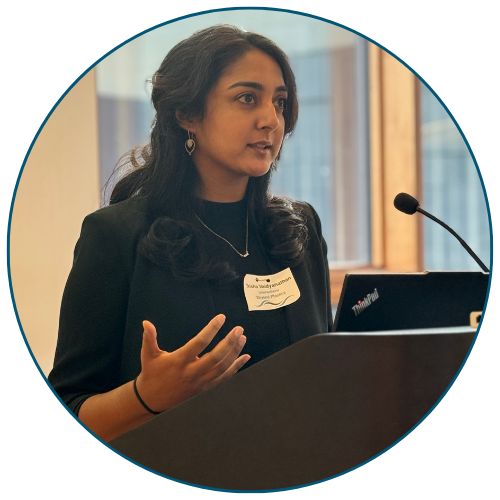
Trisha: The plastics crisis is one of the most urgent environmental challenges of our time. We are producing more and more plastic each year, and the science on how plastic affects our planet, our health, and the environment is undeniable. It has never been more clear that large-scale policy and legislative action is necessary. I knew Beyond Plastics would be the best place to make an impact!

Rita: My personal rage against plastics has been growing exponentially in recent years. Once you start paying attention to how we're really not given any choice about interacting with unnecessary plastic all the time, it's impossible to unsee (plus I'm very fond of the ocean, and I think it would be nice if we stopped ruining it). The plastic crisis is at the intersection of so many critical issues—climate, justice, health, biodiversity, water, consumption, land use—and we have to start holding the right people accountable. I'm always looking for systems-level fixes to complicated social problems, so the opportunity to come work with Beyond Plastics was a dream in many ways.
Q: Can you tell us a bit about what your role is?

Trisha: As the Science Director, I help in "all things science". A big part of my role is ensuring that everything we do is grounded in strong scientific evidence and meets high standards of scientific integrity. I support our incredible policy and organizing teams to decipher and communicate the newest science. I also help lead our own research efforts so we’re not only communicating the science on plastic pollution, but actively contributing to our knowledge about its impacts.

Rita: I'm leading Beyond Plastics' national effort to help communities organize against chemical recycling facilities. Chemical recycling is an industry attempt to convince policymakers that it's okay to keep making as much plastic as they want, because there are technologies that can break plastic back down to its component parts and make new plastics out of them. Of course this isn't the case—chemical recycling technologies mostly turn plastics into low-grade fuels and hazardous by-products, and that's when they work as intended. There are very few chemical recycling facilities successfully operating in the country right now, but given the current political climate, many more are being proposed. These facilities pose serious health and safety threats to the communities where they're placed, which of course are primarily low-income, black and brown communities that are already burdened by industry-created environmental problems. It's a privilege to be able to support folks in communities all around the country as they speak up to defend their air, their water, and their health.
Q: As a woman during this month of celebrating women's historical achievements, where do you see us in this moment of the movement?
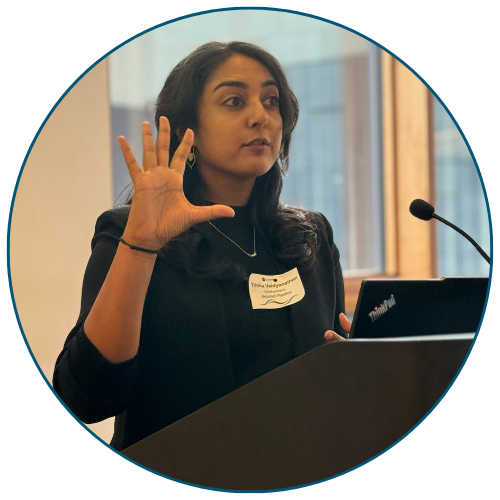
Trisha: I actually feel hopeful and optimistic! In this field, I’m constantly inspired by brilliant, dedicated women who are leading research, shaping policy, and organizing communities. There is a powerful network of women working hard to make this world a better place. I feel lucky to be in such good company, and I know that with these women, the world is in good hands.

Rita: It's extremely satisfying, if unsurprising, to see how many leaders working on plastics and petrochemicals within the environmental justice movement are women. Given the national gutting of pro-environment regulations we're seeing in this moment—the undoing of many decades of hard work by people who care about the planet and our shared future—it would be very easy to get dejected and burned out. Instead, when I look around this space, I see a lot of fiercely committed community advocates who are taking a deep breath and doubling down, but not at the expense of their own health. The women I'm lucky to work with are as unyielding in their demands for justice as they are in reminding you to go drink a glass of water and get some good rest. Women's leadership in this space is rooted in care for community and each other, which speaks to the true path out of this era of extraction, endless consumption, and waste that's choking the planet. Listen to women. Support women. Vote for women. You can thank us later.
We hope you are as inspired as we are by these two brilliant women! A recurring monthly gift provides the reliable support that Trisha, Rita and the rest of our staff need to build a more powerful grassroots network, educate stakeholders about the dangers of chemical recycling and other false solutions, advocate for strong commonsense policies to reduce single-use plastic, advance reuse and refill infrastructure, and protect public health especially in environmental justice communities.