

As Long as Grass Grows: The Indigenous Fight for Environmental Justice, from Colonization to Standing Rock
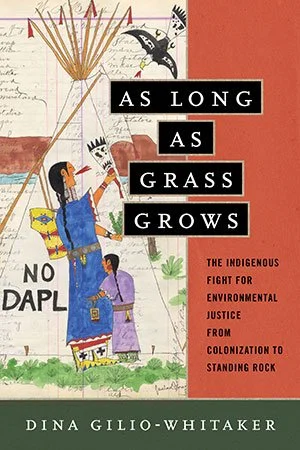
Released in March 2021 by Beacon Press | 224 pages
By Dina Gilio-Whitaker
Recommended by Penny F. in Charlottesville, VA:
“This book addresses environmental justice from a perspective in some ways different from that of the previous two books: impacts on a different demographic and in a broader variety of ways- but one commonality—involuntary imposition of adverse environmental impacts on their health and that of their sacred ecosytems. Described in some detail is the Standing Rock protest, beginning in 2016, which included the local Standing Rock Sioux tribe and thousands of Native American supporters from across North America setting up camps to try and block the oil project, arguing that the project threatens sacred native lands and could contaminate their water supply from the Missouri river, which is the longest river in North America. The 1,200-mile-long Dakota Access pipeline (DAPL) is a $3.7 billion project that would transport crude oil from the Bakken oil field in North Dakota to a refinery to Patoka, Illinois, near Chicago. Protests, confrontations with law enforcement, many lawsuits, and presidential administrations’ holds on construction delayed but, unfortunately, did not prevent its completion.”
From the Publisher:
Through the unique lens of “Indigenized environmental justice,” Indigenous researcher and activist Dina Gilio-Whitaker explores the fraught history of treaty violations, struggles for food and water security, and protection of sacred sites, while highlighting the important leadership of Indigenous women in this centuries-long struggle. As Long As Grass Grows gives readers an accessible history of Indigenous resistance to government and corporate incursions on their lands and offers new approaches to environmental justice activism and policy.
Throughout 2016, the Standing Rock protest put a national spotlight on Indigenous activists, but it also underscored how little Americans know about the longtime historical tensions between Native peoples and the mainstream environmental movement. Ultimately, she argues, modern environmentalists must look to the history of Indigenous resistance for wisdom and inspiration in our common fight for a just and sustainable future.
