Host a Starbucks Demonstration
Beyond Plastics is mobilizing people nationwide to urge Starbucks to reduce its heavy use of plastics. This guide will walk you through organizing a demonstration/news conference at a local Starbucks store.
For support, contact Alexis Goldsmith (she/her), Beyond Plastics national organizing director. You can reach her at alexisgoldsmith@bennington.edu
Goals of the Campaign
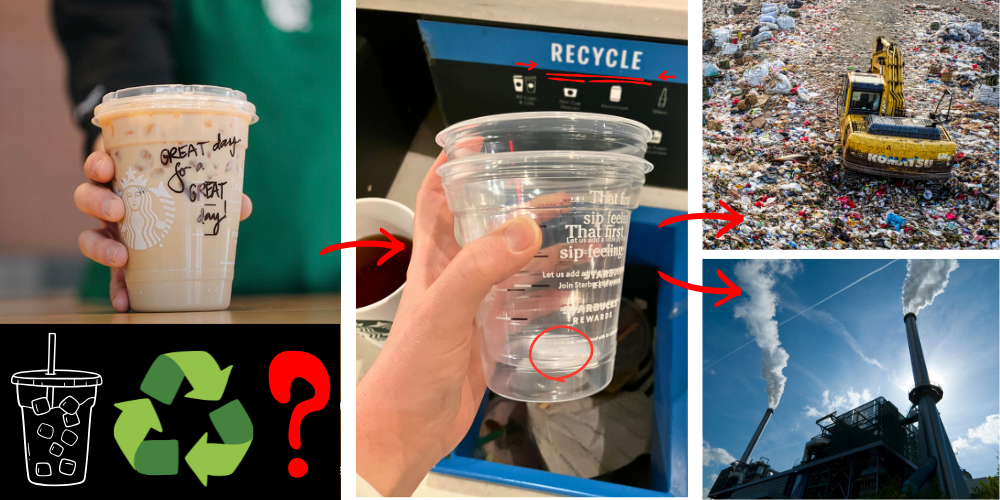
Companies like Starbucks must be held accountable for deceptive recycling claims and start reducing their plastic use. Starbucks uses nearly 8 million plastic cups a day and advertises them as recyclable, but in reality, most end up in landfills and incinerators. Starbucks should implement three REAL solutions that will significantly reduce its plastic pollution:
Commit to following Starbucks’ “A Better Cup for All” existing policy by supporting workers with the resources and staffing they need to serve ALL customers who order inside their company-owned stores in a reusable ceramic cup or glass, unless customers specifically request to-go cups. Good news: Starbucks says this is its actual written policy, but the reusable cups and glasses are often not offered.
Implement a nationwide switch from plastic to paper to-go cups and lids, just like Starbucks has already done in more than 550 stores across 14 states.
Immediately stop deceiving the public about plastic recycling at Starbucks stores by removing the recycling images of plastic (cups) from its in-store bins.
Background Information
What did Beyond Plastics investigate? Beyond Plastics investigated Starbucks for making plastic cup recycling claims. Our report, released in May 2026, showed that even when a Starbucks customer did everything correctly — placed their used Starbucks plastic cup into a clearly marked, in-store recycling bin — 90% of the cups that were tracked, using electronic tracking devices, ended up at landfills, incinerators, and waste transfer stations. In fact, none of the tracked cups went to an actual plastic polypropylene recycling factory.
Why Starbucks? Starbucks is the world's largest coffee chain. In the U.S., the company serves millions of people in more than 17,000 stores. Seventy-five percent of Starbucks' U.S. beverage sales are cold drinks, usually served in polypropylene (No. 5 plastic) cups. Based on the company’s 2025 annual revenues and the volume of its cold beverage sales, Starbucks is estimated to sell about 8 million plastic cups (and lids/straws) every day in the U.S., generating enormous single-use plastic waste. And Starbucks’ solution to this plastic mess? To deceive the public into thinking that its plastic cups actually get recycled.
Starbucks’ public statements: In February 2026, Starbucks announced that its plastic cups are "widely recyclable" and now accepted for recycling—although this is a corporate claim Starbucks has made for years. Prompted by announcements from WM, the nation’s largest waste management company, and the industry-backed labeling group "How2Recycle," Starbucks decided it was time to reinforce that its plastic cups are recyclable.
Does accepting a material mean it will be recycled? No. Accepting plastic for recycling versus actually recycling plastic are two completely different things. That gap is the whole story. The U.S. recycling rate for plastic is under 6%. And almost all of that number comes from No. 1 and No. 2 bottles and jugs—not No. 5 polypropylene.
Which U.S. factories buy No. 5 post-consumer plastic cups, and what is their capacity? Starbucks announced a recyclable claim even though the United States lacks the capacity to reprocess millions of tons of polypropylene — and there’s little economic incentive to build more facilities since virgin plastic is cheap. The factories known to reprocess No. 5 polypropylene are few and far between. A December 2025 Greenpeace report identified just two commercially operating factories in the entire country that claim to buy polypropylene cups: KW Plastics in Alabama, and St. Joseph Plastics in Missouri. These two factories can reprocess only about 2% of all polypropylene (No. 5 plastic) used in the U.S., not just cups. Recycling at scale depends on economics (the cost and carbon emissions of shipping baled material) and the capacity of U.S. plastic reprocessors.
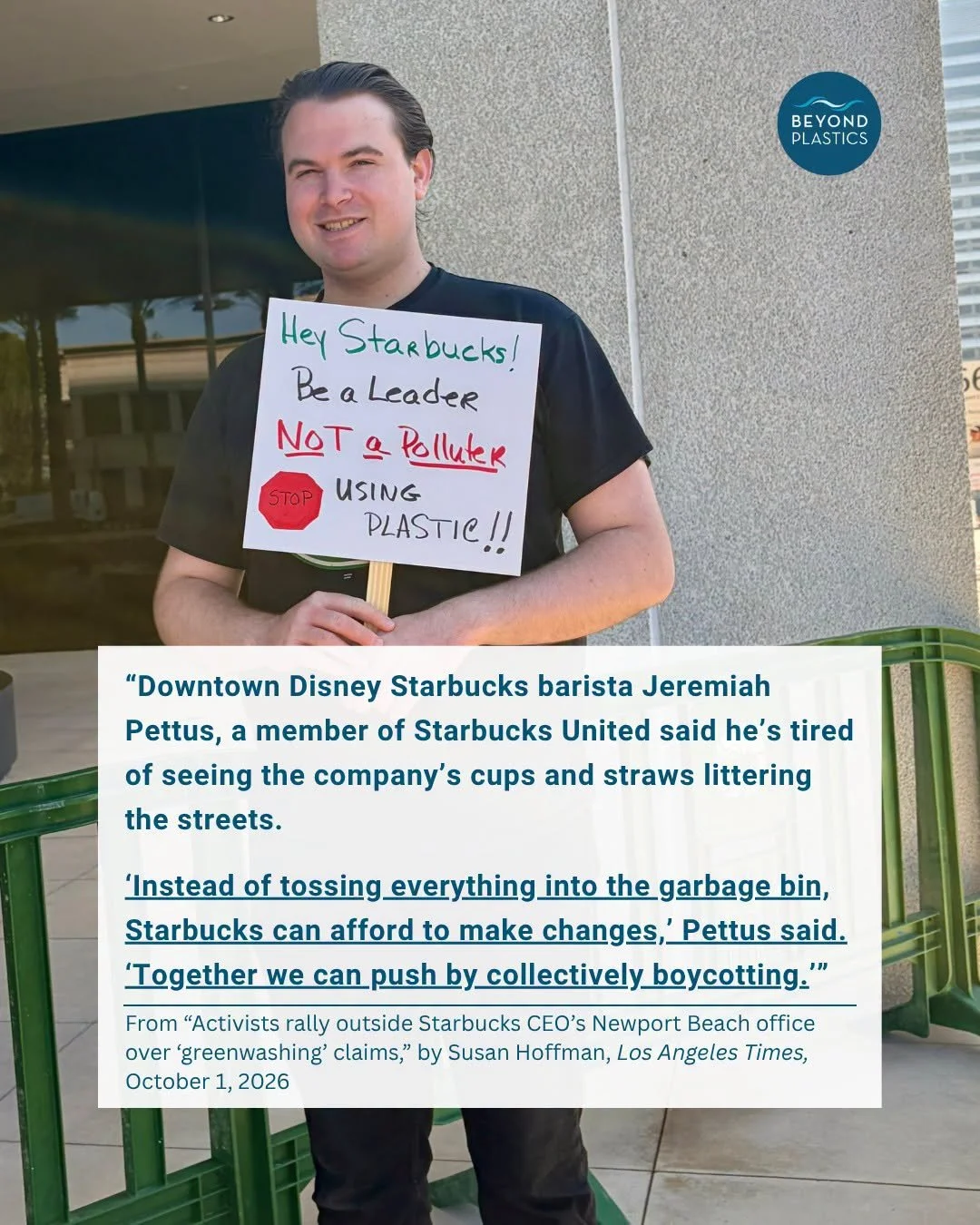
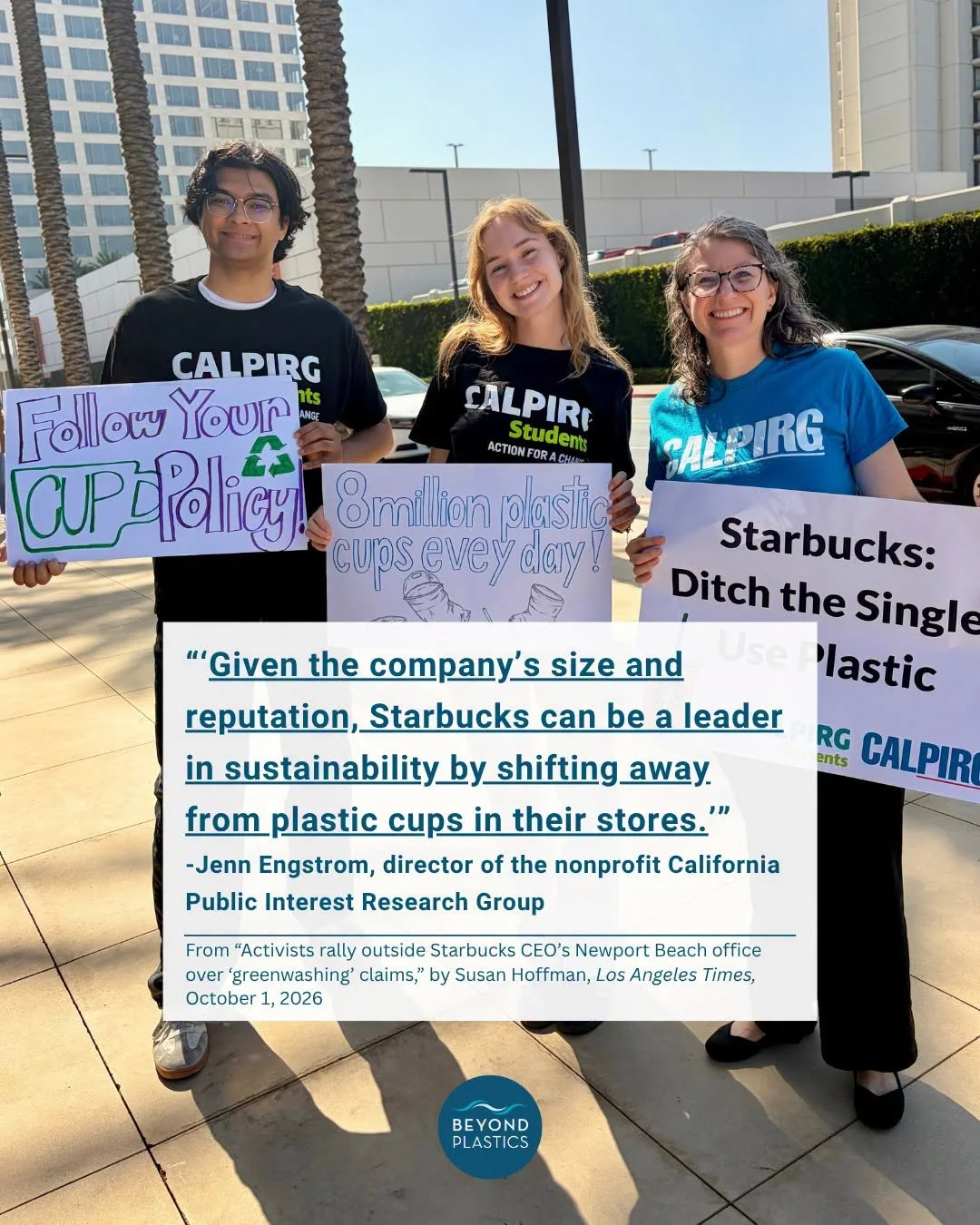
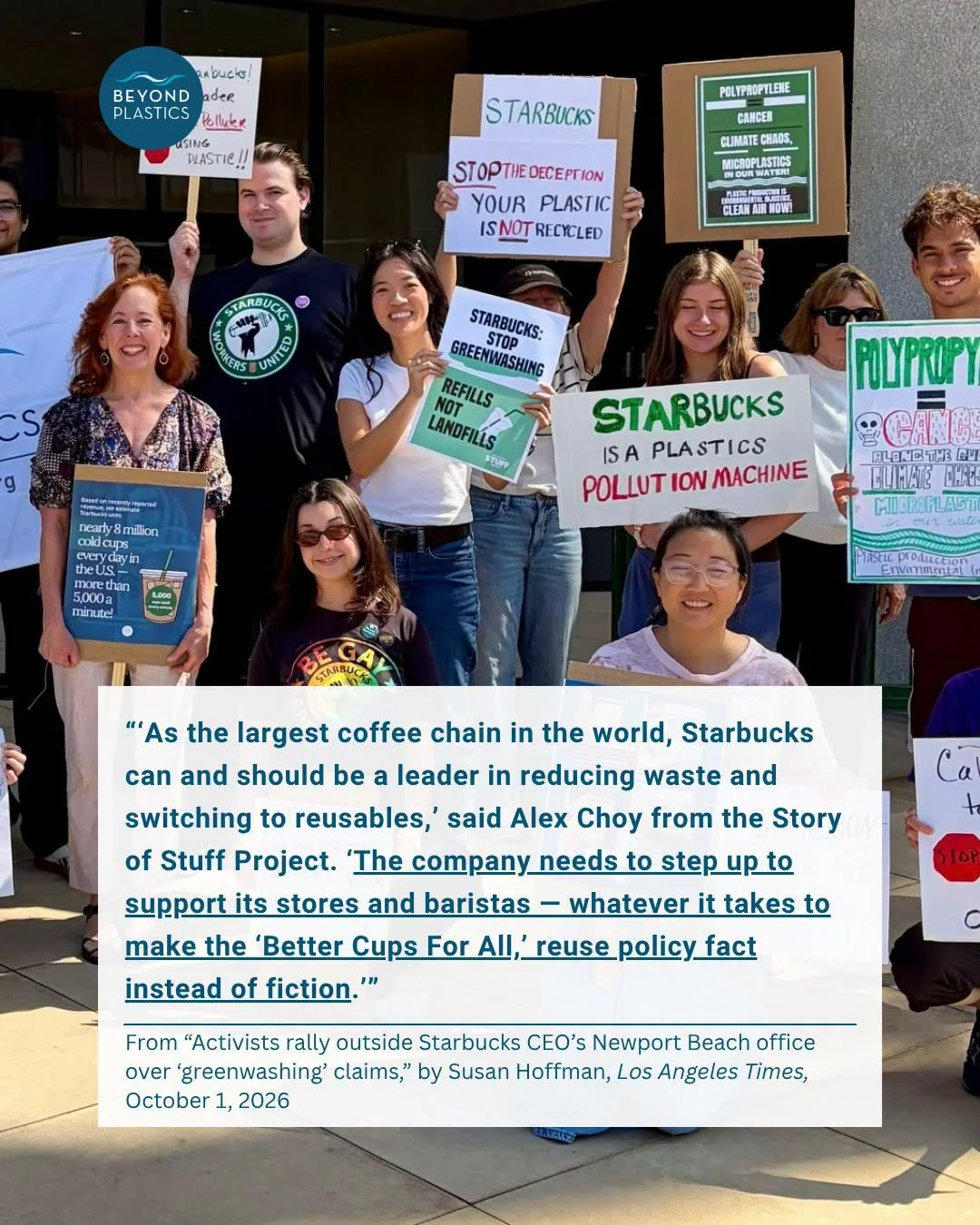
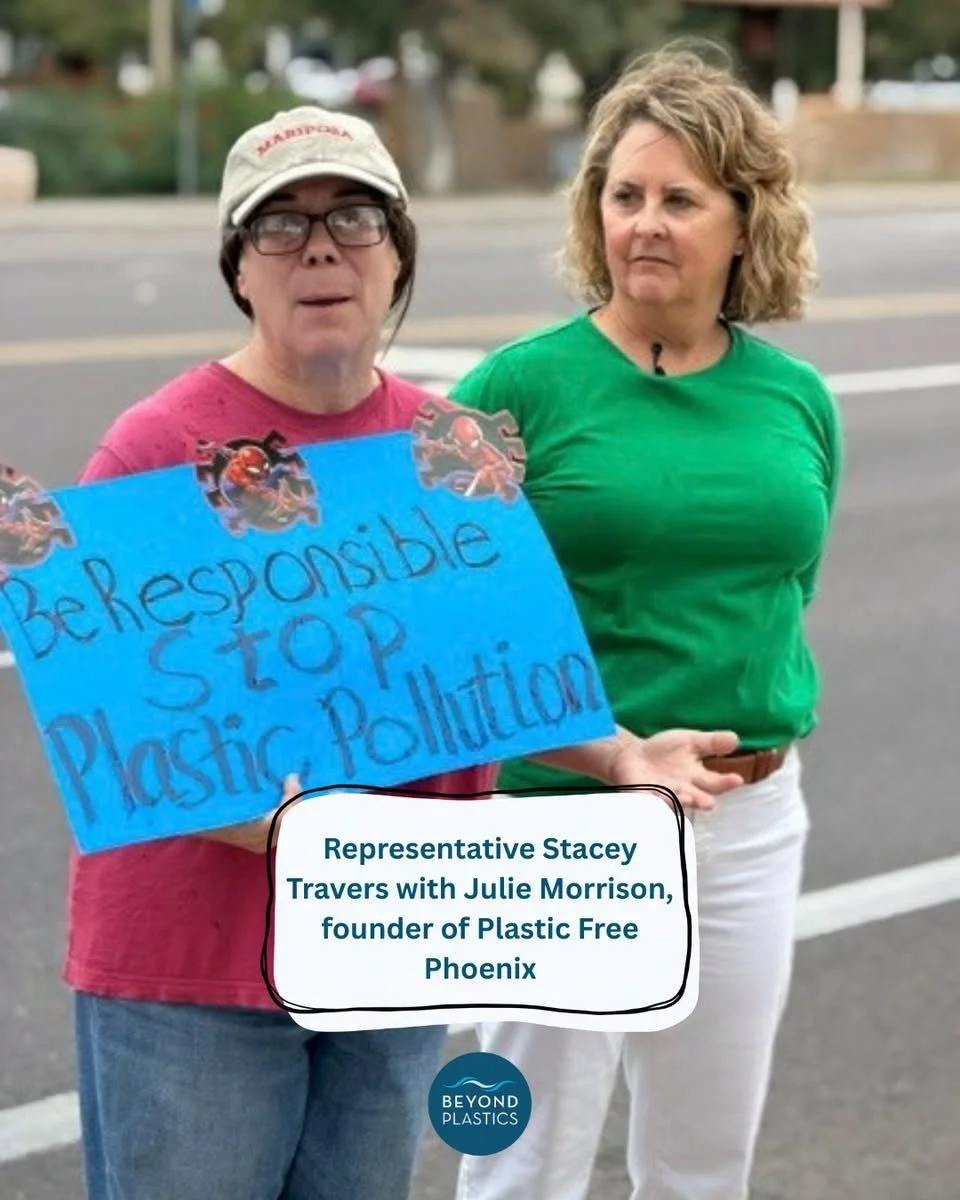
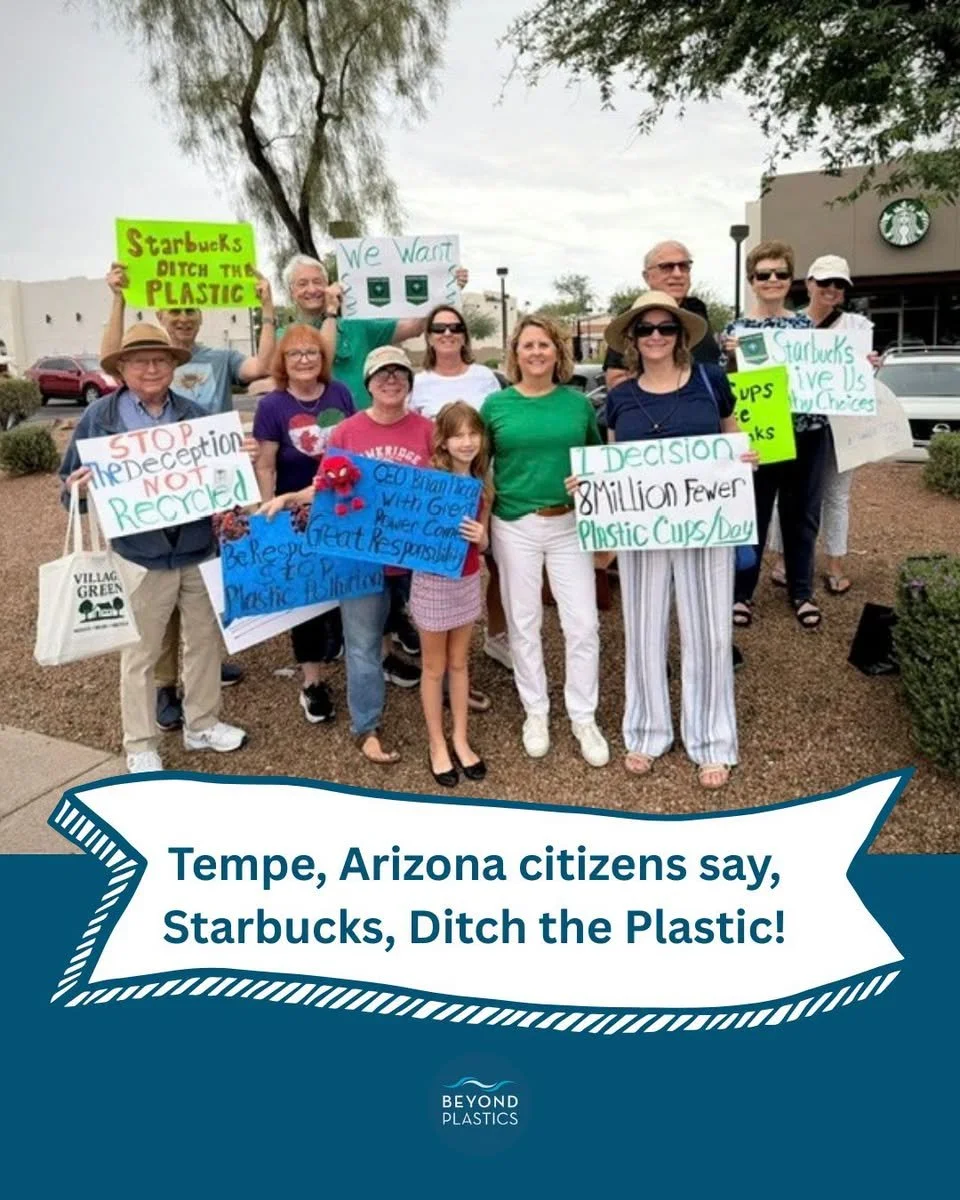
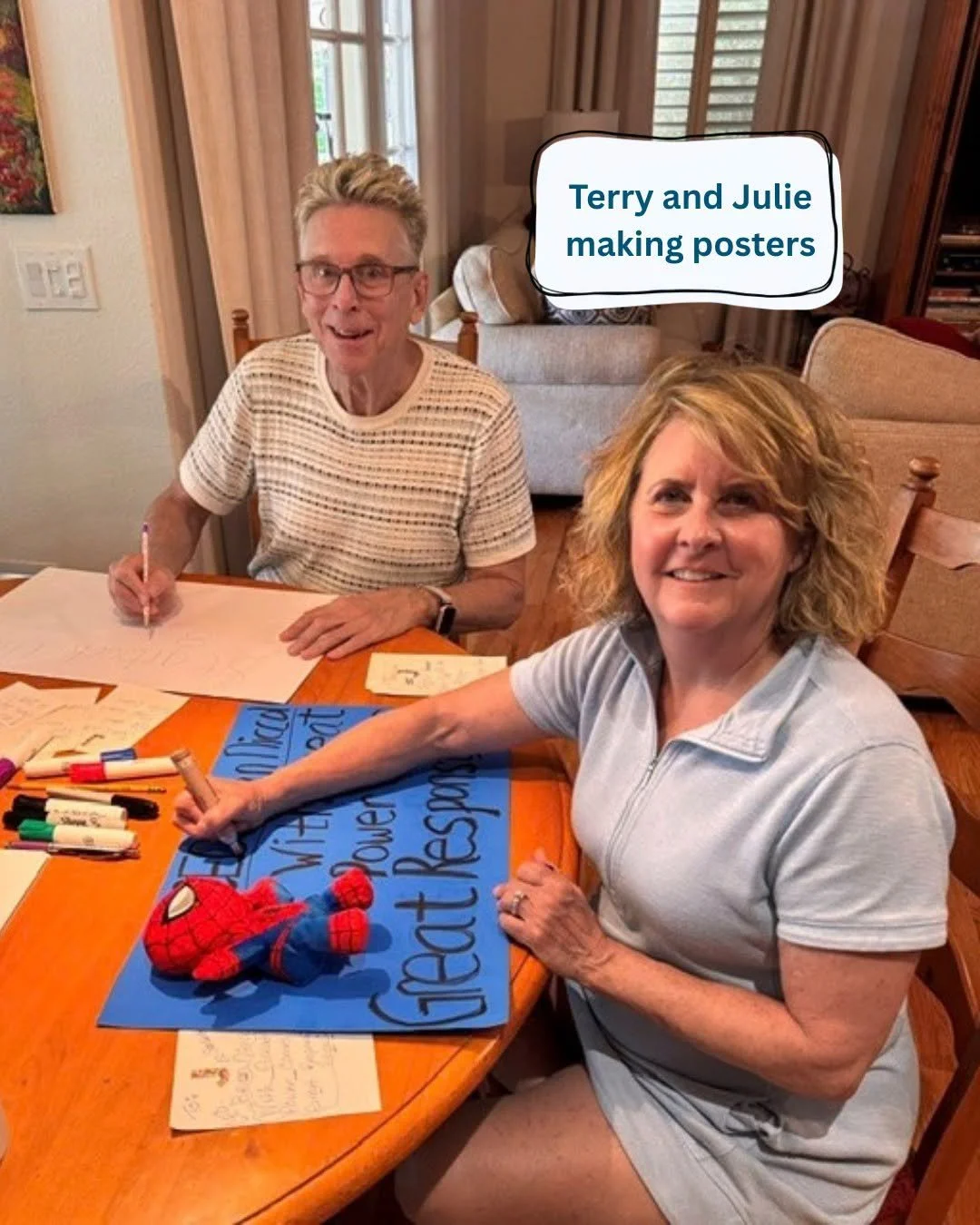
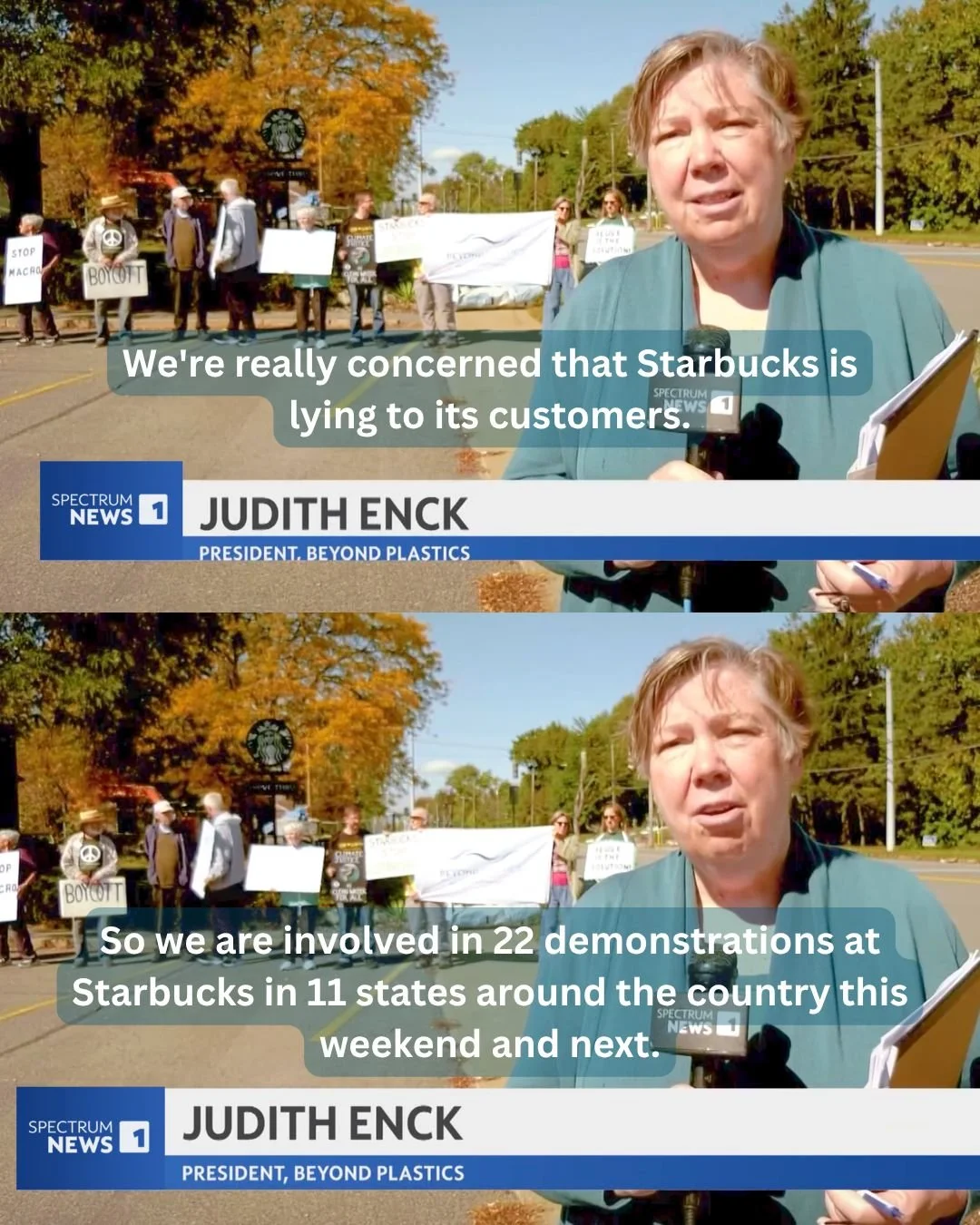
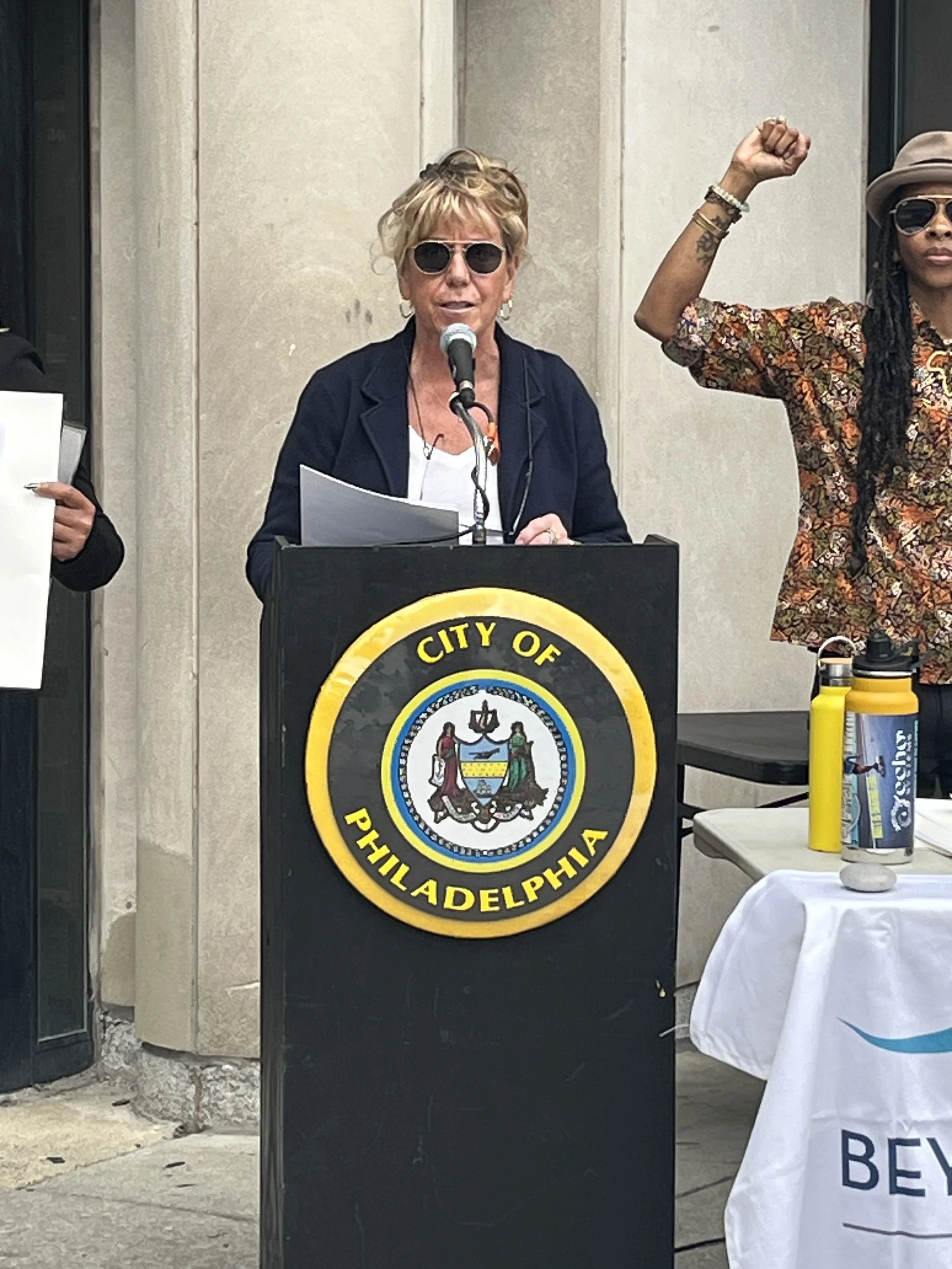
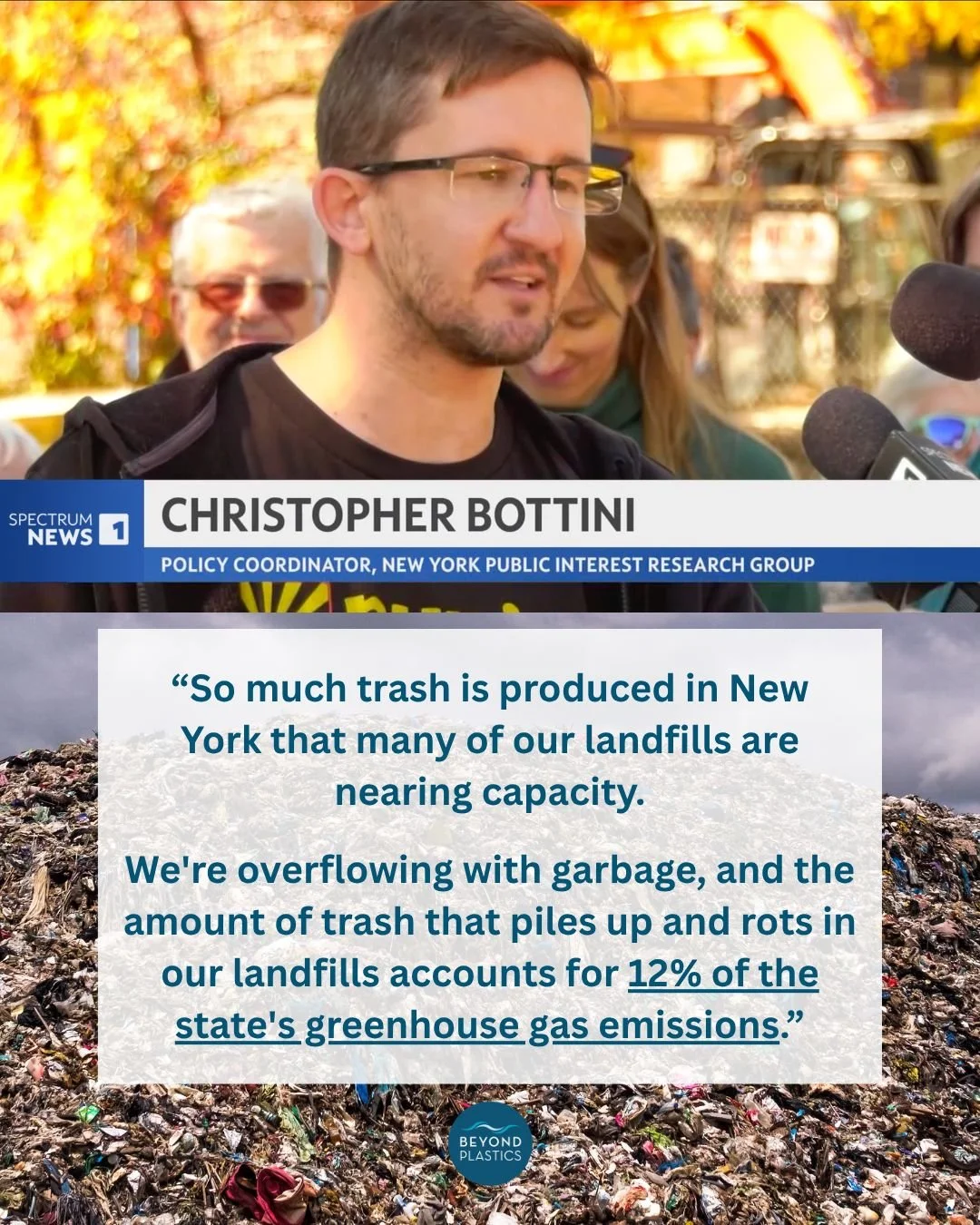
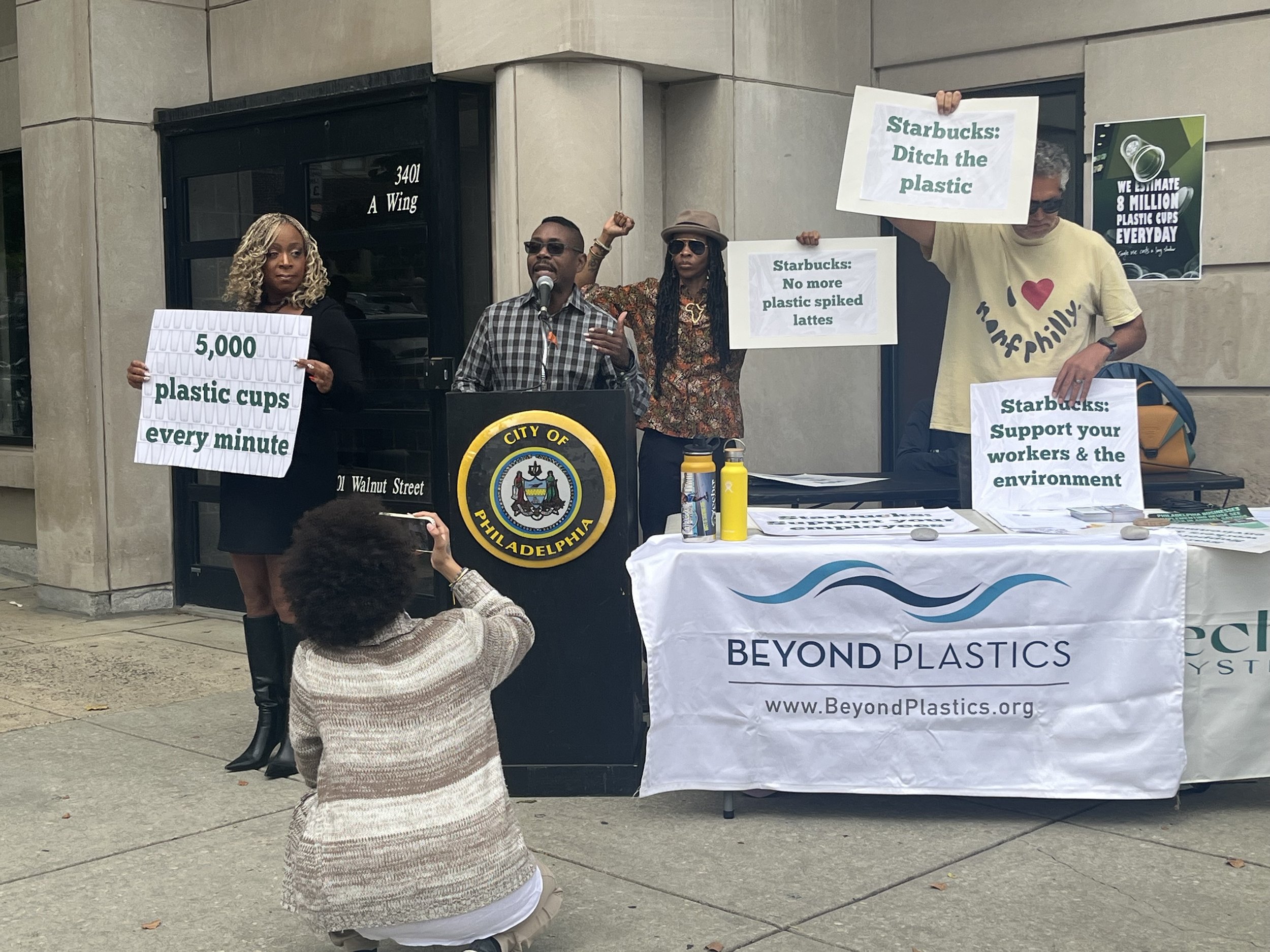
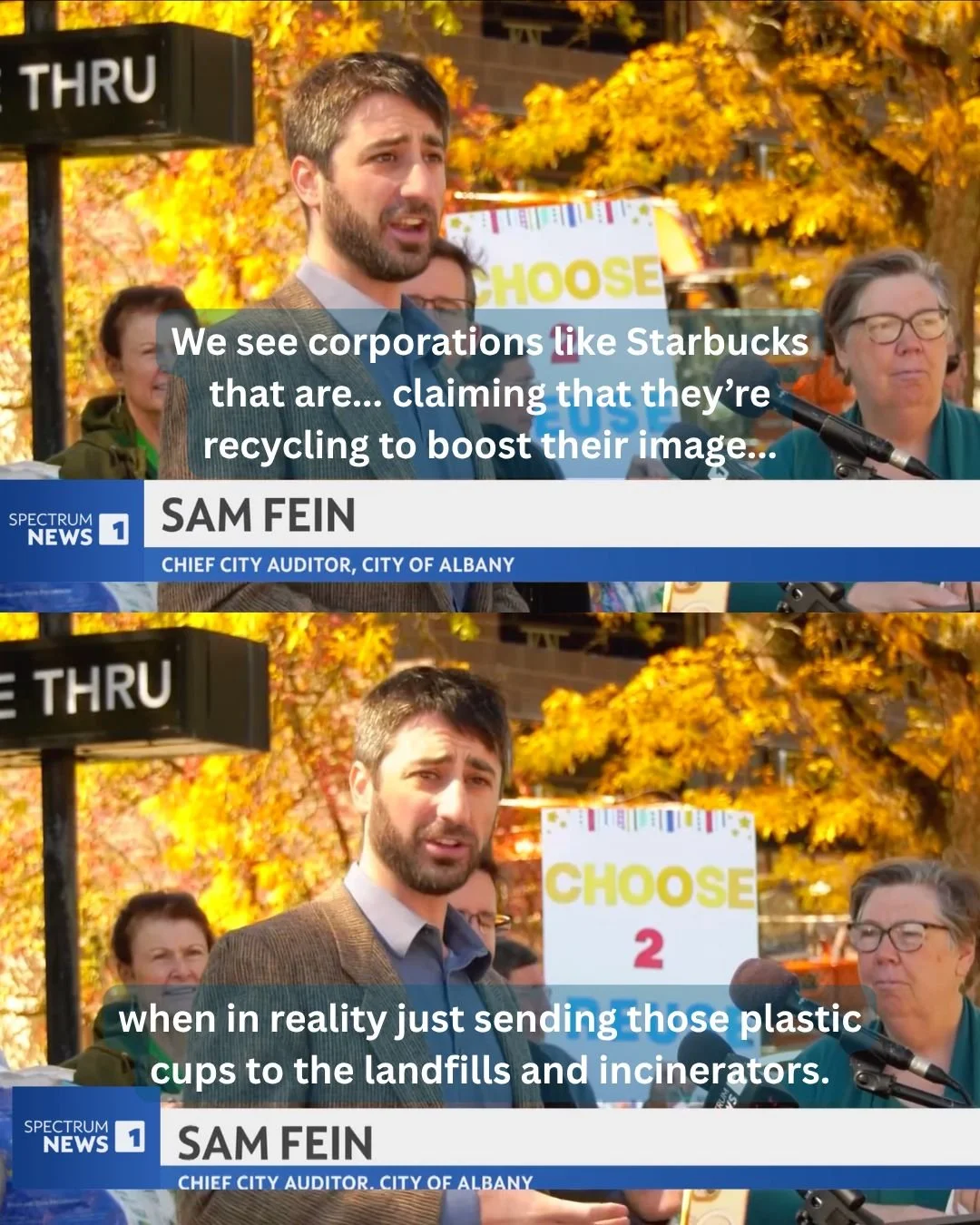
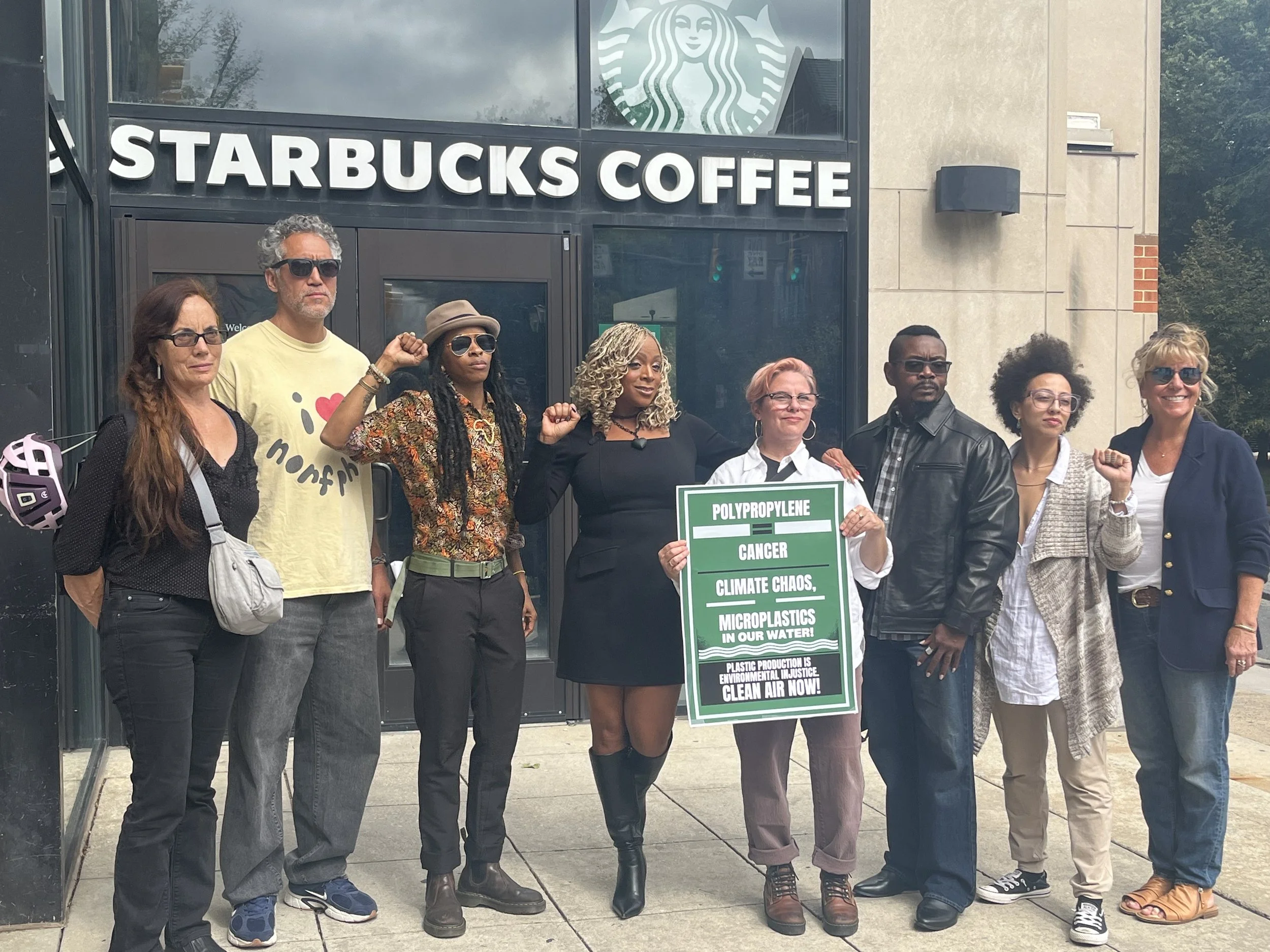
Guide to Hosting a Successful Demonstration (resources available at the end)
As soon as possible: Find people to organize with you — it’s more fun that way.
Pick a local Starbucks — Choose a free-standing Starbucks location that is easy to reach and has public space to gather. Don’t choose a Starbucks kiosk in a grocery store or Target, etc. Make sure there is enough room on the public sidewalk or roadway. Note: These demonstrations will be held outside the stores only.
Pick a date & time. Pick a convenient date and time for a 30-minute event to maximize attendance and media coverage. The best time for reporters is typically between 11 a.m. and 1 p.m. Weekends are often easier for people to attend.
Create a flyer with an RSVP form and/or event page. You can create an RSVP page using Facebook, Google Forms, or Action Network and use it as a central place to collect RSVPs and promote your event. Create a page that shows the date, time, and location of your event, and include a simple form so people can RSVP and you can collect their emails to follow up with instructions and touch base as you get closer to the event date. If you have an email list (which you should!), add anyone who RSVPs through your form.
Promote, promote, promote, and collect RSVPs. Strong outreach and an RSVP page drive turnout. Share the event listing and webpage with your email list, social media followers, and your own friends and relatives. Ask everyone to RSVP on your event page, and share the event with other organizations.
Tip: Ask local organizations and faith groups to co-sponsor. Co-sponsors help increase turnout by sending representatives and promoting the event to their networks. We’ll automatically share your event with nationwide co-sponsors.
List co-sponsors on the event flier, event page, and media advisory. You can add co-sponsors as co-hosts if you create an event on Facebook.
Ask any co-sponsors to share the event page and request that they RSVP with their email lists and on their social media pages.
Have co-sponsors co-sign onto your letter (list signers and organizations at the bottom of your letter).
Encourage co-sponsors to make signs, costumes, and contribute in other ways.
Invite 3 to 4 people to speak at the event. Your speakers will talk to the participants and reporters at the event about the impact of Starbucks’ plastic pollution and greenwashing on the planet and our health. Each speaker should have three minutes. You also need to make sure to tell reporters about our demands for Starbucks to reduce plastic use. For speakers, consider someone from your group, elected officials, local environmental voices, kids, health professionals, etc. You’ll cover talking points in your run of show — and we’ve provided sample talking points to help get them started.
Create a local media list, or ask a local group you know to borrow theirs.
You could have the best media advisory and news release in the world, and it wouldn’t matter if you have no one to send it to. So, building a strong press list is a step you can’t ignore. If you know a friendly allied organization, you can ask them (very nicely) if they’re willing to share a copy of their local media list—you might get lucky! If not, here are some suggestions to help you get started or build on what you already have:
Look at the websites of your local print, radio, and TV news stations. The site usually lists the emails for the editor and/or a news tip line.
Use a spreadsheet to keep track of media contacts.
Do a Google search for stories on related topics and see who wrote them — dig around to find their contact information and add them to your list.
Always ask reporters for their contact cards and add them to your growing media list.
Draft a media advisory and news release. We’ve prepared a template media advisory and news release — all you need to do is customize it with the details of your own event and location. The media advisory simply announces the event and should be emailed to reporters three days in advance, the day before, and the morning of the event. Focus on local newspapers, including weeklies; local TV; and local radio, especially your local NPR station. Email them the media advisory, but also call each outlet. For TV and radio, ask to speak with the assignment editor in the newsroom.
The news release is a separate document with all the details and quotes, and you issue it to reporters at the event as paper copies and email it to every news contact you have an hour before the news conference starts. We’ll cover this in detail on the coaching calls.
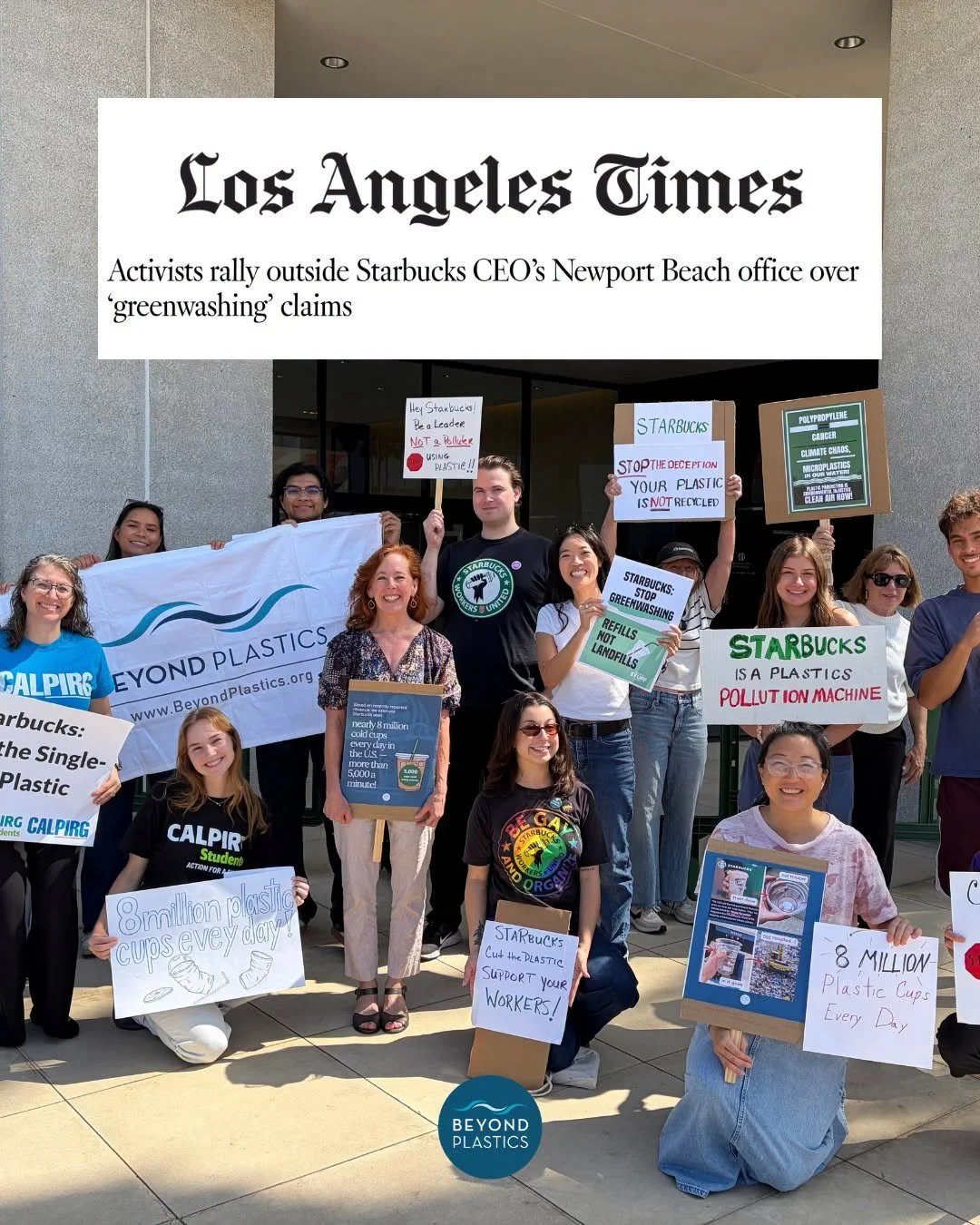
Schedule an “art build” for people to gather to make signs, banners, and props, or just ask everyone to bring signs. Visuals are a great way to up your event. They improve your chances of getting news coverage and make your social media pictures more effective. Plus, making signs ahead of the event is a fun activity.
We encourage using Starbucks’ familiar green colors to make your visuals instantly recognizable. Also, keep messages simple, so they're easy to read at a glance. Maybe someone could even make a plastic cup monster — a spinoff of the plastic bag monster. Take a look at these banner and sign ideas from similar events. Get creative and have fun!
Draft a run-of-show. We’ve prepared a sample run-of-show to help you get a sense of what it should include. This helpful document walks through the sequence of events and lets everyone know who should do what, when, and where.
Share the run-of-show and schedule a walk-through. Around a week before your event, send the run-of-show to the speakers and key organizers, and schedule a time to walk through it together. Although you can do this meeting virtually, it’s probably helpful for at least a few people to meet up at the store so you can all be prepared about what happens where — scout out your meeting spot, figure out the best place to take photos, make sure it’s clear where people should park, etc.
Some things to consider ahead of time:
What will you do if it rains? Plan a rain date or pick a store with a big enough covered area to accommodate your group.
Scout out the location to get a sense of how much space you have to work with (without blocking the entrances), parking, photo opportunities, etc.
Assign someone to take pictures and another person to livestream the event on Facebook, Twitter, or Instagram. Test the cell service at the location you’ve chosen to see whether livestreaming will be possible. If reception is poor, you can also assign someone to record the event and upload it to social media afterward.
Make banners, signs, or even costumes for the event. Invite your local, county, and/or state elected officials.
Print fliers to hand out to customers, and bring a clipboard with an email sign-up to help you build your list of volunteers and activists.
Think about any chants or cheers you might lead in front of the store, or any type of visual performance you may want to enact.
Please remember these are peaceful demonstrations calling on Starbucks CEO Brian Niccol to adopt changes. Do not enter the stores or engage with overworked Starbucks employees. If a manager or someone else from the store comes out to talk to you, express your concerns about how much plastic Starbucks uses and explain our three demands.
Issue your media advisory. Once you’ve finalized your media advisory, copy it into the body of an email and send it to your media list two days before your event, then again on the morning of your event. Don’t forget to send your media advisory to the Associated Press (AP) daybook at news@applanner.com, and share it with any co-sponsors so they can help share it too. Many reporters will not open an attachment, so put the info in the body of the email.
The day before and the morning of your event, call the desk editors at your local media outlets and remind them of your media advisory. This is a GREAT way to increase press turnout. These phone calls are really important.
Issue your news release at the event and one hour before it. Now that you’ve finalized your news release, print 10 copies to provide to reporters attending the event. Create and bring a sign-in sheet for reporters so you can build your media list and invite them to future events. Have all participants sign in so you can stay in touch.
As soon as the event ends, copy the text of your news release into the body of an email (reporters hate attachments) and send it out to your media list. If you have a good photo or two from the event, you can include it in the email to help paint a picture. Make sure to include a link to your final letter. You can schedule your email before the event to be sent at the designated time, if your email provider has that function — Gmail does.
Share your success! Share the photos from your event on social media and tag Starbucks and Beyond Plastics. Feel free to adapt our sample post language below to suit your needs. Please send your photos and any media coverage of your event to Alexis Goldsmith, national organizing director, at alexisgoldsmith@bennington.edu, and tag Beyond Plastics in any social media posts. Our handles are:
X — @plasticsbeyond
Facebook — @beyondplasticsaction
Instagram — @beyondplastics
Threads — @beyondplastics
YouTube — @beyondplastics
SAMPLE POST LANGUAGE:
Thanks to everyone who joined us at @starbucks in CITY/STATE to urge Starbucks CEO #BrianNiccol to reduce #singleuseplastic in their stores. We call on Starbucks to:
Serve ALL customers who order inside company-owned stores in a reusable ceramic mug or glass, unless the customer specifically requests a to-go cup.
Switch from plastic to paper to-go cups across all stores.
Remove the deceptive recycling images of plastic cups from in-store recycling bins
Sign the petition at beyondplastics.org/actions/starbucks-cups
——
A few snaps from yesterday's news conference at @starbucks in CITY/STATE, urging Starbucks CEO #BrianNiccol to commit to reducing the overwhelming amount of single-use plastic cups in its stores. See our petition at: actionnetwork.org/petitions/starbucks-cups
———
3. We hope @starbucks gets the message that it must #breakfreefromplastic by phasing out #singleuse #plastic cups in its stores ASAP. Read our petition to CEO #BrianNiccol at actionnetwork.org/petitions/starbucks-cups
HASHTAGS:
#Starbucks #BrianNiccol #plasticpollution #plasticwaste #planetorplastic #refusesingleuse #plasticpackaging #microplastics #BeyondPlastics
ACCOUNTS TO TAG:
Beyond Plastics: Instagram | Facebook | LinkedIn | Bluesky | Threads | X
Starbucks: Instagram | Facebook | LinkedIn | Threads | X
Starbucks CEO Brian Niccol: LinkedIn
SAMPLE MEDIA ADVISORY
This is your chance to get media coverage for your event, so let reporters know it’s coming up and make your media advisory count with the tips below. Click here to use our media advisory template as a starting point.
Give it an eye-catching headline
Include your contact information at the top
Highlight your impressive local speakers
Include a quote or two so busy reporters can grab them for a piece
Keep it short


SAMPLE RUN-OF-SHOW
One key to a successful event is drafting a clear run of show to guide your schedule. Make sure everyone knows their responsibilities during the event to avoid confusion. Schedule a practice run from a week to several days before the event. Click here for a sample run-of-show document you can adapt.
Additional Resources:
Flier template you can use to promote your event
Sample RSVP page you can copy (Google Forms)
Beyond Plastics’ Starbucks Playbook for background information, toolkits, FAQs, and a list of national/regional partners committed to help with this campaign
Sample news conference talking points and Starbucks Workers United talking points.
